 By eric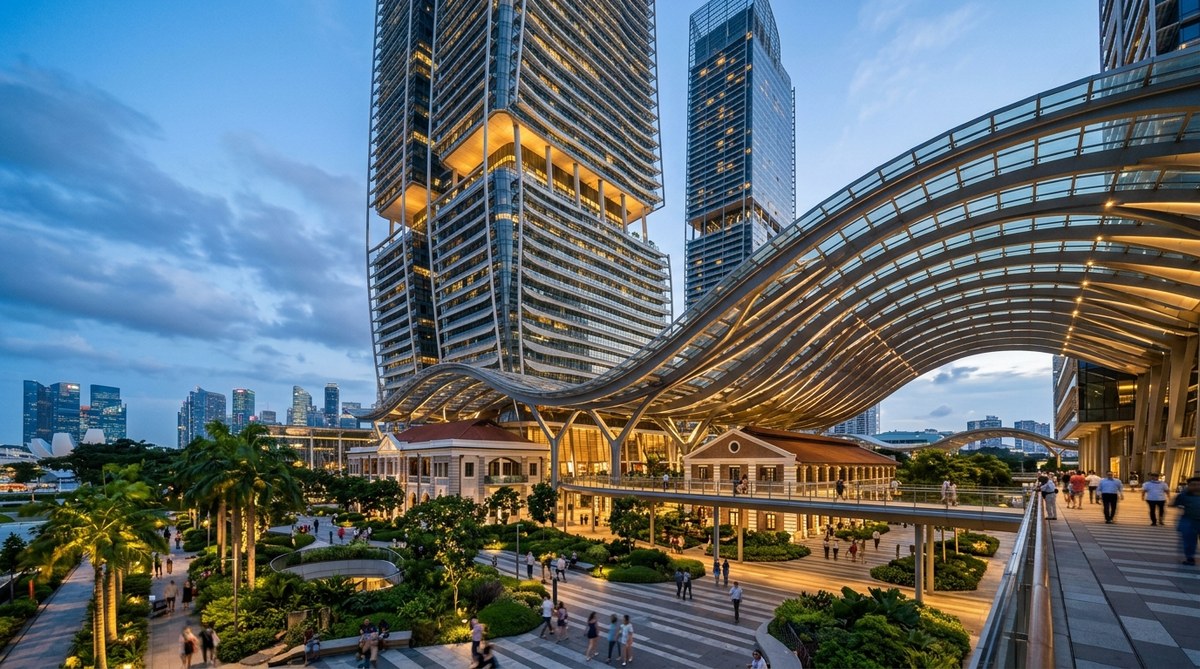
Picture this: a serpentine steel canopy that looks like a creature from a sci-fi film, floating above four heritage buildings and two sleek towers. That is the architectural reality of South Beach Singapore. It is a place where the old British colonial army barracks meet a futuristic mixed-use development. The contrast is intentional. The design is bold. And every corner of this 3.5-hectare site tells a story about how Singapore balances its past with its future. For architecture enthusiasts, South Beach is a living textbook. For travelers, it is a stunning backdrop for a meal, a stroll, or a stay. Let us walk through why this development deserves a spot on your itinerary.
South Beach Singapore is not just a building complex; it is a case study in urban design. The development by Foster + Partners and Aedas merges sustainable tech with heritage preservation. Its iconic canopy cools the microclimate while collecting rainwater. Visitors can admire architecture, eat at world class restaurants, and even stay at the JW Marriott. This guide helps you appreciate every detail.
The Vision Behind South Beach
South Beach came to life through a collaboration between two heavyweight architecture firms: Foster + Partners (known for London’s Gherkin and Hong Kong’s HSBC Building) and Singapore based Aedas. The result is a development that feels both futuristic and respectful of its surroundings.
The project sits on Beach Road, right at the edge of the historic Civic District. That location mattered. The architects did not want to build another glass box. Instead, they created a “city within a city” with three main components: the South Beach Tower (office space), the JW Marriott Hotel, and a retail podium connecting everything.
The numbers are impressive. South Beach Tower rises 47 stories. The canopy stretches over 30,000 square meters. But what makes it special is how the design responds to Singapore’s tropical climate. Every element serves a purpose.
The Signature Canopy That Defines the Skyline
If you look at South Beach from across the Singapore River, your eyes will lock onto the canopy. It wraps around the top of the hotel and office tower like a curved ribbon. The canopy is not just decoration. It is a fully functional microclimatic device.
- It shades the outdoor walkways, keeping pedestrians cool.
- It channels rainwater into a collection system for irrigation.
- It reduces solar heat gain on the glass facades.
- It creates a visual connection between the two towers.
The canopy is made of lightweight aluminum and steel. At night, LED lights make it glow. Locals call it the “dragon’s spine.” You will want to photograph it from every angle.
How Old and New Live Side by Side
One of the most fascinating parts of South Beach Singapore architecture is how it integrates heritage. The site once housed the Beach Road Camp, a military complex with four colonial buildings built in the 1920s. Instead of tearing them down, the architects preserved them.
These low rise buildings now house restaurants, bars, and boutique retail. They sit under the shadow of the modern tower. The contrast is jarring in the best way. You can sip a cocktail in a building that once housed British soldiers while looking up at a high tech canopy.
This approach is part of Singapore’s larger strategy for urban development. The island city does not erase its past. It layers it. South Beach is the best example you will find of that philosophy in action.
A Masterclass in Green Architecture
Sustainability is baked into every part of South Beach. The development has won multiple awards, including the BCA Green Mark Platinum.
Features include:
- A district cooling system that reduces energy use by 30%.
- Solar panels on the rooftop of the heritage buildings.
- Green walls on the facade of the hotel.
- A building management system that monitors air quality and lighting.
- Efficient water fixtures and rainwater harvesting.
The architects designed the canopy specifically to lower the ambient temperature by up to 2 degrees Celsius. That is a big deal in a city where humidity is constant. You will feel the difference as you walk from the open plaza into the shaded area under the canopy.
“South Beach is not a trophy building; it is a lesson in how to build for a tropical city.”
— Moshe Safdie (not directly associated, but his quote captures the ethos)
Photographing South Beach’s Architecture
If you want to capture the best images of South Beach, timing matters. The morning light hits the tower facade at an angle that brings out the metallic grid. Evening golden hour makes the canopy glow. Night time reveals the LED lighting.
Here are three practical steps for your photography session:
- Arrive at 7 a.m. The sunlight is low and the crowds are thin. You can get a clear shot of the heritage buildings without people blocking the view.
- Walk along the canopy from the JW Marriott entrance to the office tower. This gives you a sequence of frames: close up of the structure, then a wide angle of the whole development.
- Use a wide angle lens (16-24mm) to capture the scale. Stand at the corner of Beach Road and Nicoll Highway to get the full composition with the canopy and both towers.
For more insider tips, check out our guide to best instagram worthy spots in south beach singapore.
Where to Experience the Architecture
You do not need to be a design student to appreciate South Beach. You can experience it through its dining and accommodation.
The JW Marriott South Beach occupies the hotel tower. Many rooms have floor to ceiling windows that frame the canopy and the city skyline. If you stay here, ask for a high floor facing the Marina Bay Sands side.
The ground level restaurants, like the famous Akira Back, use the heritage buildings as a backdrop. Sit outdoors to feel the canopy shading effect while you eat.
If you are just visiting, the public plaza near the main entrance is open to everyone. Grab a coffee from a nearby cafe and watch the light shift across the steel. It is a free architecture lesson.
For a deeper look, sign up for a guided tour. The concierge at South Beach can arrange one. Alternatively, you can follow our how to experience south beach’s architecture like a local expert guide.
Your Architecture Walking Tour in 3 Steps
You can cover the architectural highlights of South Beach in about 90 minutes. Here is a numbered list to follow:
- Start at the heritage block (Gate 2 on Beach Road). Walk past the old barracks. Notice the timber louvres and high ceilings. These were designed for natural ventilation before air conditioning existed.
- Move to the canopy’s highest point (near the JW Marriott pool entrance). Look up at the steel ribs. Count the layers. Feel the breeze funneled through the structure.
- End at the South Beach Tower lobby (office side). The interior uses warm wood and stone, a contrast to the cool metal outside. Take a photo of the ceiling installation by artist …
By the end, you will understand why this site is considered one of the most successful examples of mixed use development in Asia.
What Sets South Beach Apart
Other developments in Singapore, like Marina Bay Sands or VivoCity, are impressive. But South Beach has unique qualities that make it stand out for architecture lovers.
- It preserves four colonial buildings, while most other developments replace them.
- The canopy is not a traditional roof; it is a climate control system.
- It connects directly to the Esplanade MRT station, making it accessible.
- The residential component (South Beach Residences) has private sky gardens not visible from the street.
- The mix of uses (hotel, office, retail, residential) works in a compact footprint.
These features create a dynamic environment that changes throughout the day.
Techniques and Common Mistakes
When visiting or photographing South Beach, avoid these pitfalls.
| Technique | Common Mistake |
|---|---|
| Use a polarizing filter to cut glare on glass facades | Forgetting to adjust the filter angle for each shot |
| Arrive early for empty walkways | Showing up at lunchtime when the sun is harsh and crowds are thick |
| Stand at the Esplanade end to capture both towers in one frame | Standing too close to the canopy, making it look like a messy tangle |
| Visit on a cloudy day for even light | Shooting in direct noon sun, which blows out the highlights on the white steel |
| Include people in the foreground for scale | Leaving the frame empty, making the structure look smaller than it is |
Expert Advice
I spoke with an architecture professor at the National University of Singapore who has studied South Beach extensively. Here is what he wants visitors to know:
“Most people look at the canopy and think ‘wow.’ But the real genius is in the ground level. The architects studied how wind flows through the site. They tilted the canopy and placed the heritage buildings to channel the breeze. That is why sitting under the canopy feels ten degrees cooler than standing in the sun. Do not just look up. Feel the air.”
That advice changes how you experience the space. Next time you visit, pause for a minute in the middle of the plaza. Close your eyes. Feel the wind. That is the architecture working.
Bring Your Architecture Journey Full Circle
South Beach Singapore architecture is not just about a building. It is about how a city can grow without losing its soul. The development shows that you can have a skyscraper that also cools the street. You can have a hotel that tells a story of the past. You can have a place where people live, work, and play in the same block.
When you visit South Beach, take your time. Walk slowly. Look at the details. Notice how the canopy changes color with the sky. Notice how the heritage buildings sit quietly under the new steel. This is architecture that lives and breathes.
After your visit, share your photos with us. We would love to see how you captured the magic. And if you want more ideas on what to do nearby, check out is south beach worth visiting a complete activity guide for a full day plan.
Happy exploring.