 By eric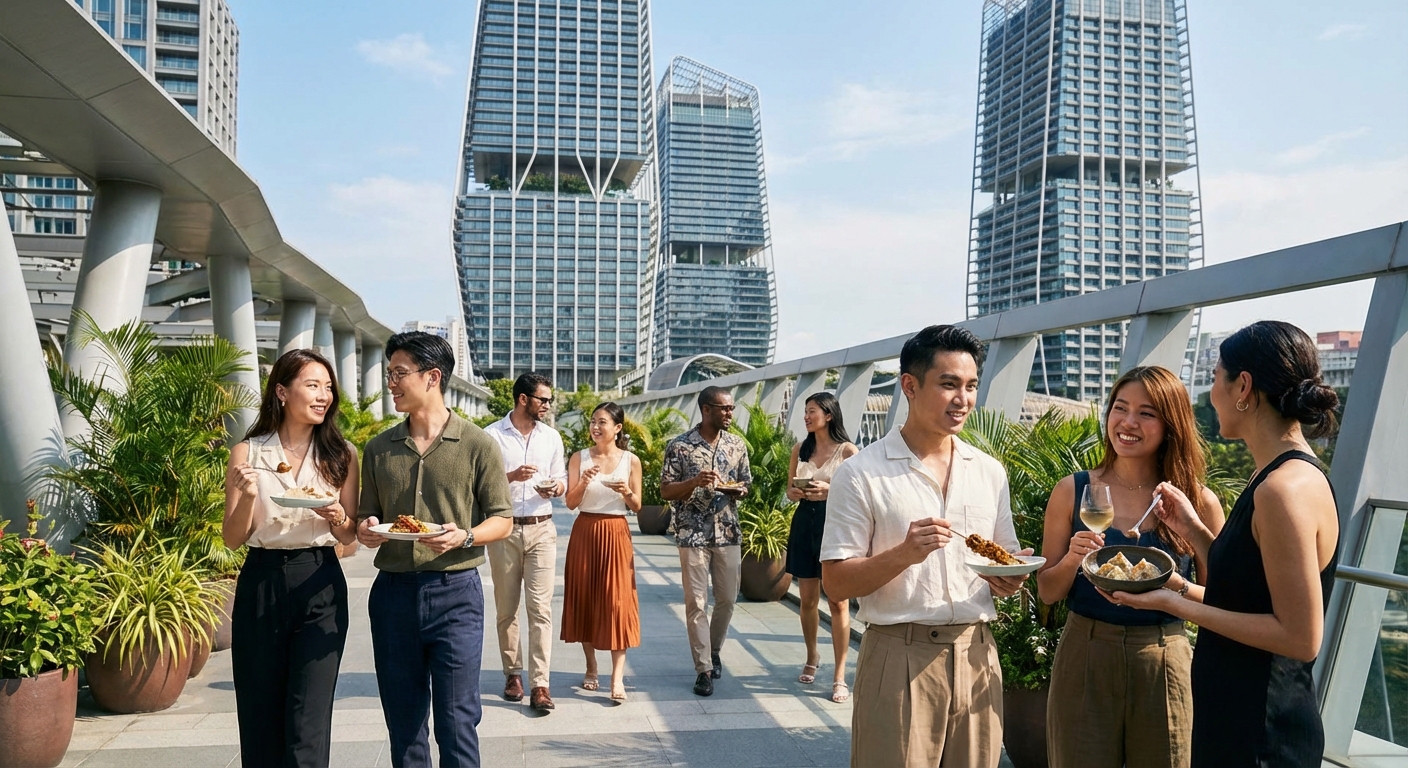
Walking through Singapore’s South Beach district with an empty stomach is the best decision you’ll make. This waterfront neighborhood brings together heritage architecture, modern dining, and flavors that tell stories of the city’s multicultural soul. A south beach food tour here isn’t about Miami’s Art Deco buildings or Cuban sandwiches. It’s about discovering Singaporean cuisine in one of the island’s most dynamic areas.
Singapore’s South Beach area offers guided culinary walking tours showcasing local and international cuisine. Tours typically last two to four hours, covering five to eight food stops. Expect to sample hawker favorites, modern fusion dishes, and heritage recipes while learning about the neighborhood’s transformation from military land to culinary destination. Book ahead during peak tourist seasons from June to August and November to January.
What Makes South Beach Different
South Beach sits between the historic Civic District and Marina Bay. The area transformed from colonial military grounds into a mixed-use precinct blending residential towers, hotels, and restaurants.
You won’t find the typical tourist traps here. The food scene caters to office workers, hotel guests, and locals who know their char kway teow from their chee cheong fun.
The neighborhood’s layout makes it perfect for walking tours. Most venues cluster within a 15-minute radius. Air-conditioned shopping arcades connect outdoor plazas, giving you shelter when tropical rain arrives.
Planning Your Food Tour Experience
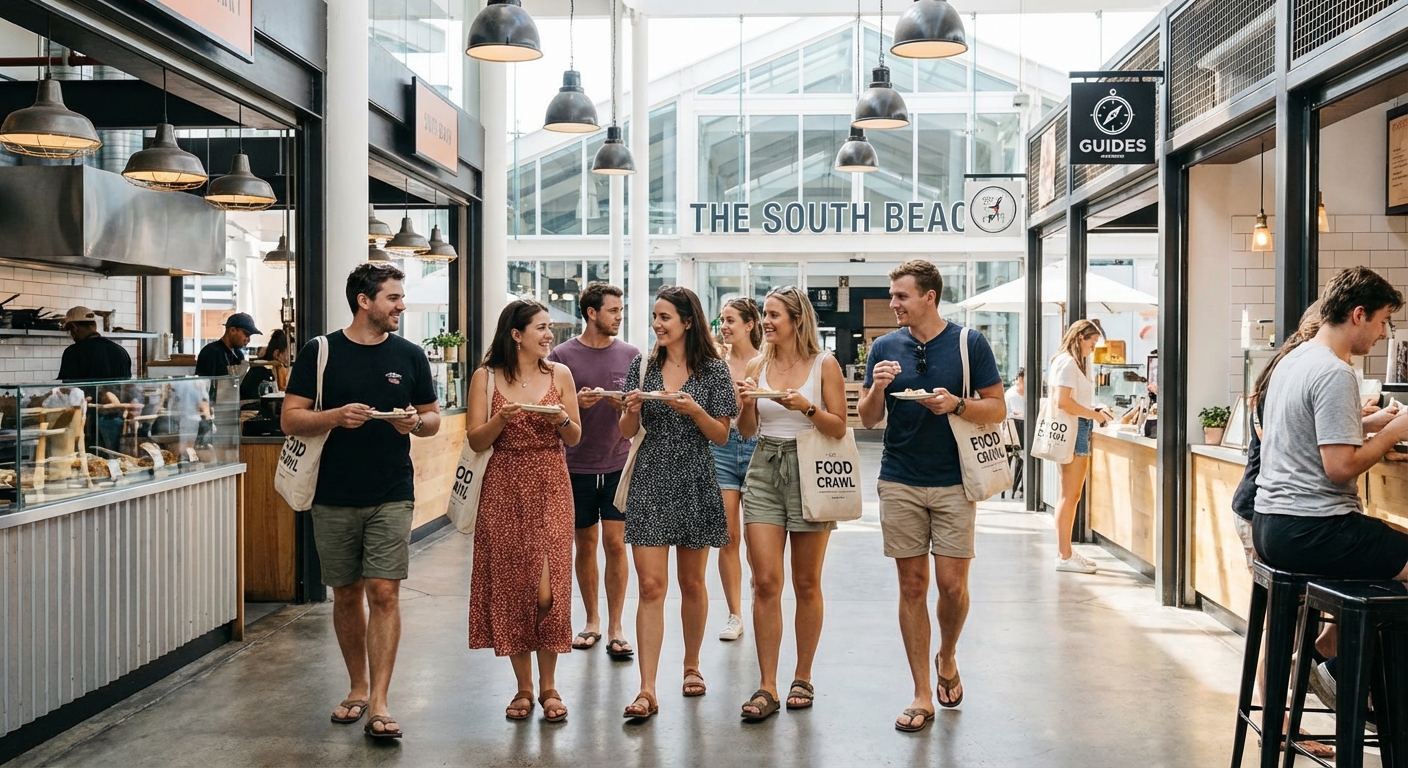
Booking a guided food tour removes the guesswork. Local guides know which stalls have the shortest lines, which chefs speak English, and which dishes are worth the calories.
Tours operate year-round, but timing matters. Morning tours (9 AM to 12 PM) work well for breakfast and brunch spots. Evening tours (5 PM to 9 PM) capture the neighborhood as office workers head home and dinner service begins.
Here’s what to consider before booking:
- Group size: Smaller groups (six to eight people) allow better interaction with vendors
- Dietary restrictions: Most operators accommodate vegetarian, halal, and allergy concerns with advance notice
- Walking distance: Expect to cover two to three kilometers over the tour duration
- Weather: Singapore’s tropical climate means humidity and occasional downpours
- Footwear: Comfortable walking shoes beat sandals when you’re standing in hawker centers
What You’ll Taste Along the Way
A well-designed south beach food tour balances familiar comfort foods with adventurous local specialties. Your guide will likely include these categories:
Hawker classics represent Singapore’s soul food. Chicken rice, laksa, satay, and rojak appear on most itineraries. These dishes cost a few dollars at hawker stalls but carry decades of family recipes.
Heritage cuisine reflects Singapore’s Peranakan, Malay, Chinese, and Indian communities. You might sample kueh (traditional cakes), curry puffs, or roti prata depending on the tour route.
Modern fusion shows how young chefs reinterpret traditional flavors. Think laksa pasta, chili crab burgers, or kaya toast reimagined as French toast.
Drinks and desserts round out the experience. Fresh sugarcane juice, teh tarik (pulled tea), and ice kacang (shaved ice dessert) provide relief from the heat.
Typical Tour Structure
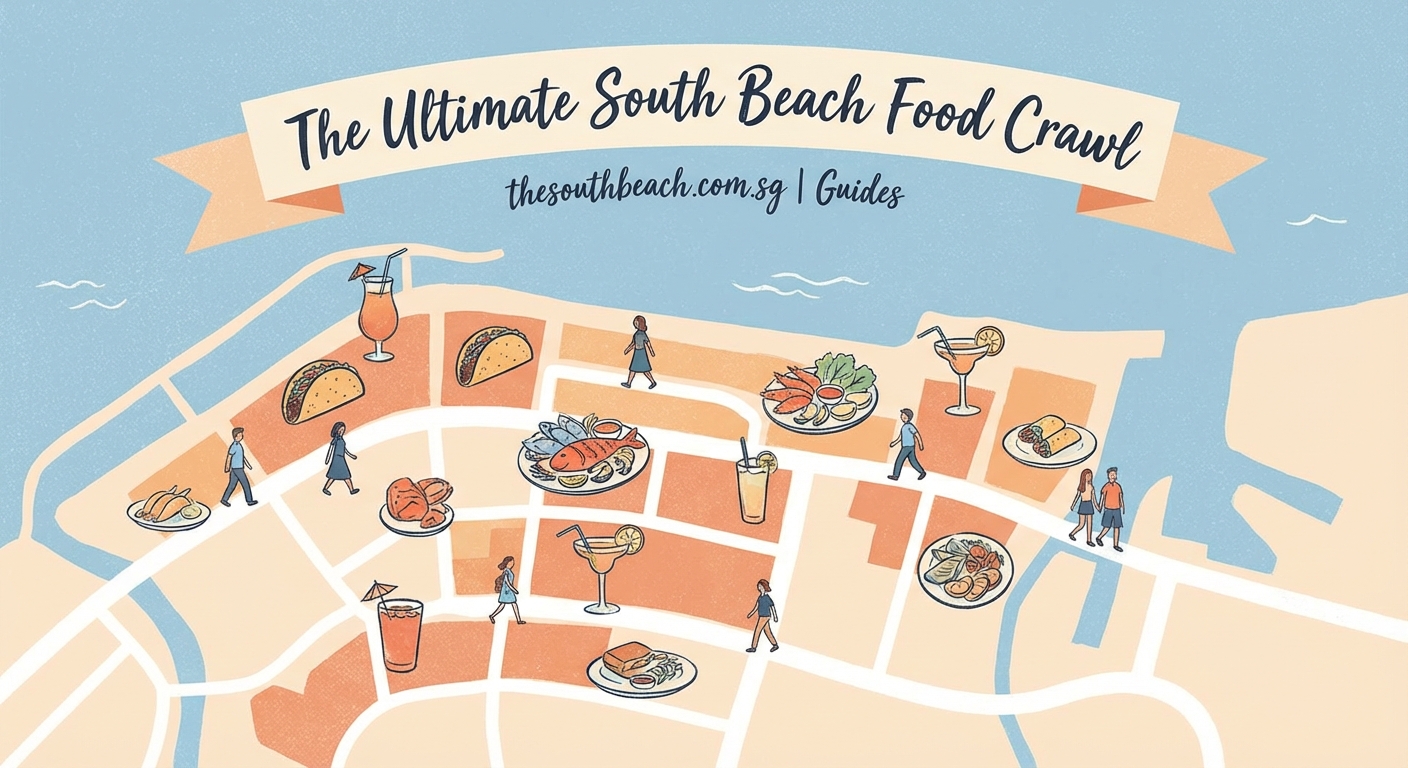
Most food tours follow a logical progression through the neighborhood. Here’s how a three-hour tour typically unfolds:
- Meet at a landmark like the South Beach Tower lobby or Beach Road entrance
- First stop introduces hawker culture with a light dish and explanation of ordering systems
- Second and third stops feature main dishes from different ethnic traditions
- Fourth stop offers a beverage break with cultural context about tea or coffee traditions
- Fifth stop presents dessert or snacks to end on a sweet note
- Tour concludes with recommendations for independent dining and exploration
Guides share stories between stops. You’ll hear about Singapore’s history, urban planning, and food culture. The best guides answer questions about everything from housing prices to where they buy their groceries.
Comparing Tour Options
| Tour Type | Duration | Stops | Price Range | Best For |
|---|---|---|---|---|
| Group walking tour | 2-3 hours | 5-6 stops | $60-$90 | Budget travelers, social experience |
| Private tour | 3-4 hours | 6-8 stops | $150-$250 | Couples, families, custom pace |
| Breakfast tour | 2 hours | 4-5 stops | $50-$70 | Early risers, lighter appetite |
| Evening tour | 3-4 hours | 6-7 stops | $80-$120 | Dinner replacement, night atmosphere |
Common Mistakes to Avoid
First-time visitors often make these errors:
Eating a full meal beforehand defeats the purpose. Come hungry but not starving. You’ll sample multiple dishes, but portions are usually small.
Wearing inappropriate clothing causes discomfort. Singapore’s humidity soaks through cotton shirts. Breathable fabrics and layers work better.
Skipping sunscreen and water leads to dehydration. Even evening tours involve outdoor walking. Bring a refillable water bottle.
Expecting Western portion sizes sets wrong expectations. Singaporean dining culture emphasizes variety over volume. You’ll taste many dishes in smaller amounts.
Ignoring your guide’s advice wastes learning opportunities. When they recommend trying something unusual, trust their judgment. You can always take a small portion.
Beyond the Standard Tour Route
South Beach connects to several neighborhoods worth exploring after your food tour ends. The Civic District offers museums and colonial architecture. Marina Bay presents waterfront dining with skyline views. Bugis and Kampong Glam provide additional hawker centers and street food.
Some tours include brief stops at these locations:
- Lau Pa Sat (Telok Ayer Market) for satay street
- Maxwell Food Centre for Tian Tian chicken rice
- Chinatown Complex for the widest hawker variety
Your guide can suggest which areas match your interests and remaining energy levels.
“The best food tours don’t just feed you. They teach you how to navigate Singapore’s dining landscape independently. Pay attention to how your guide orders, which stalls have the longest lines, and what questions to ask. That knowledge serves you for the rest of your trip.” — Tour operator with eight years of experience
Practical Logistics
Booking timeline: Reserve your spot one to two weeks ahead during regular seasons. Peak periods (Chinese New Year, summer holidays, year-end festivals) require three to four weeks notice.
Payment methods: Most operators accept credit cards online. Some require full payment at booking, others take deposits. Check cancellation policies before committing.
Meeting points: Tours typically start at accessible landmarks with clear signage. Arrive five to ten minutes early. Late arrivals may miss the group’s departure.
Language options: English-speaking tours dominate, but Mandarin, Japanese, and Korean options exist. Confirm language when booking.
Tipping culture: Singapore doesn’t have strong tipping traditions. If your guide provided exceptional service, a tip of $10 to $20 SGD is appreciated but not expected.
Special Dietary Considerations
Singapore’s multicultural food scene accommodates many dietary needs, but communication matters.
Vegetarian options appear at most stops. Indian and Chinese vegetarian traditions run deep here. Inform your operator when booking.
Halal requirements are easily met. Many hawker stalls carry halal certification. Muslim-friendly tours exist specifically for this purpose.
Allergies require advance notice. Peanut allergies pose challenges since peanut sauce appears in many dishes. Shellfish allergies limit some stops but alternatives exist.
Gluten-free needs are harder to accommodate. Rice and rice noodles form the base of many dishes, but soy sauce contains gluten. Discuss options with your operator.
Making the Most of Your Time
A food tour serves as an excellent introduction to Singapore if you’re visiting for the first time. Schedule it early in your trip. The knowledge you gain helps you make better dining decisions for the rest of your stay.
Take notes or photos of dishes you want to revisit. Ask your guide to write down stall names in Chinese characters. This helps when you return without a guide.
Don’t be shy about asking questions. Guides appreciate curious participants. Ask about ingredients, cooking techniques, family traditions, or anything else that interests you.
Pace yourself throughout the tour. You don’t need to finish every portion. Sharing with other tour members prevents waste and lets you save room for the next stop.
Weather and Seasonal Factors
Singapore’s tropical climate stays consistent year-round. Temperatures hover around 28-32°C (82-90°F) with high humidity.
The monsoon season (November to January) brings afternoon thunderstorms. Most tours continue through light rain since covered walkways connect many venues. Heavy storms may cause brief delays.
Haze from regional forest fires occasionally affects air quality (June to October). Check the Pollutant Standards Index before outdoor activities. Tours may adjust routes or move indoors during severe haze.
Public holidays and festivals change the food landscape. Chinese New Year sees many stalls close for a week. Ramadan transforms Muslim quarter dining patterns. Christmas and New Year bring crowds to popular areas.
Building Your Singapore Food Knowledge
The skills you learn on a south beach food tour transfer to other neighborhoods:
- Identifying quality by queue length and turnover speed
- Understanding menu boards with mixed languages
- Ordering at hawker stalls using the table number system
- Recognizing regional cooking styles and ingredients
- Navigating food courts and coffee shops
This foundation lets you eat confidently throughout Singapore. You’ll spot good value, avoid tourist traps, and try dishes that most visitors miss.
Your Appetite for Adventure
Food tours work best when you approach them with curiosity rather than expectations. Singapore’s culinary scene blends tradition with innovation in ways that surprise even experienced travelers.
The South Beach area captures this balance perfectly. Heritage recipes exist alongside modern interpretations. Humble hawker stalls share space with upscale restaurants. A guided tour connects these dots while filling your stomach and expanding your cultural understanding.
Come hungry. Bring comfortable shoes. Leave your assumptions behind. The flavors waiting in South Beach will reshape how you think about Singaporean food and the city itself.