 By eric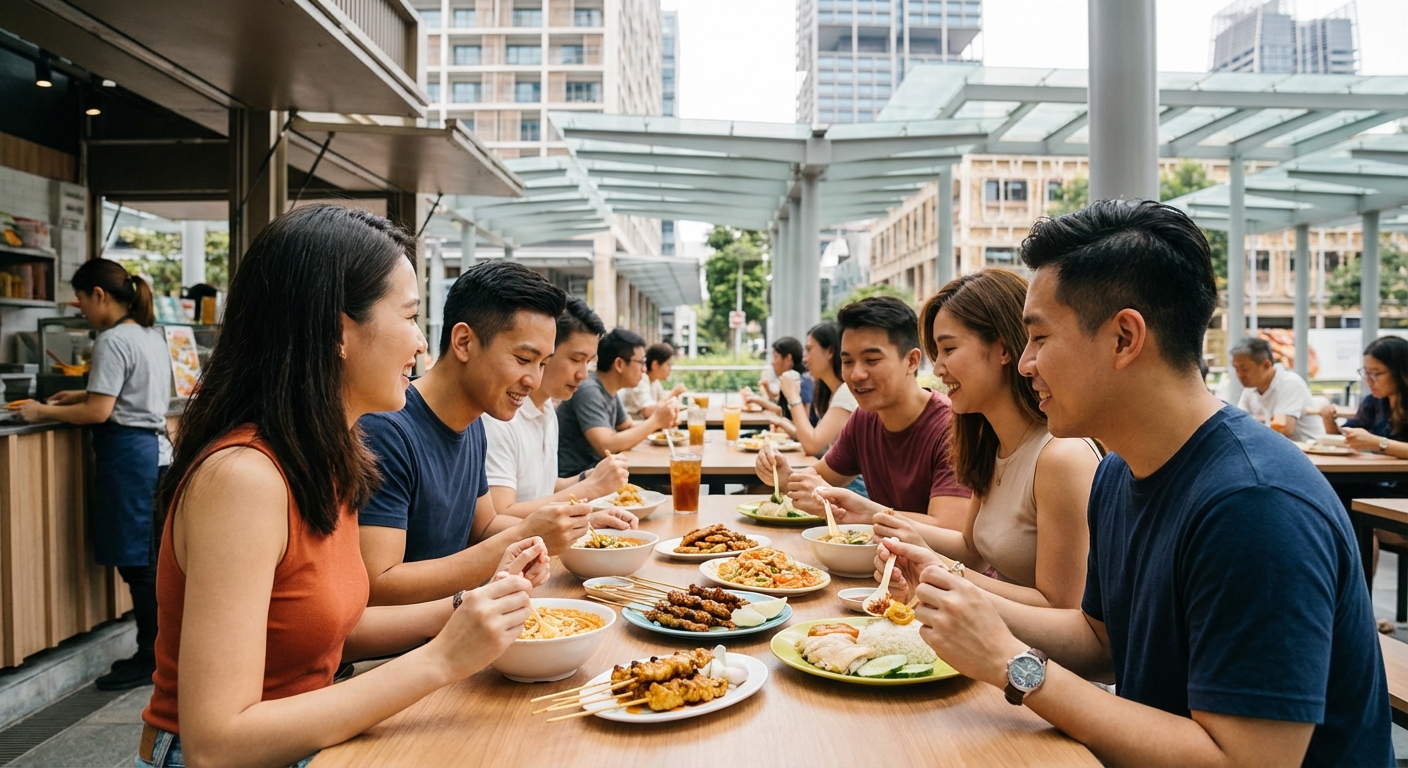
You don’t need a fat wallet to eat well in South Beach, Singapore. This waterfront district might look polished and modern, but scratch beneath the surface and you’ll find authentic local food at prices that won’t make you wince. The secret is knowing where locals actually eat, not just where the tourist brochures point you.
South Beach Singapore offers budget-friendly local dining through hawker centers, coffee shops, and neighborhood eateries. Most authentic meals cost between SGD 3 to 8. Timing your visits during off-peak hours, sharing dishes, and following office workers to their lunch spots helps you eat authentic Singaporean food without tourist markups. The best cheap eats cluster around Bugis, Beach Road, and Ophir Road within walking distance of South Beach.
Why South Beach works for budget eating
South Beach sits between the tourist-heavy Marina Bay and the authentically local Bugis neighborhood. That geography is your advantage.
Walk five minutes in any direction and you’ll hit food courts, hawker stalls, and coffee shops where a filling meal costs less than a fancy coffee back home. The area serves office workers, residents, and students who eat here daily. They won’t tolerate overpriced mediocre food.
The Beach Road corridor alone has over 30 budget eateries within a 10-minute walk. Most tourists miss them completely because they’re hunting for Instagram-worthy restaurants instead of actual good food.
Finding the hawker centers near South Beach
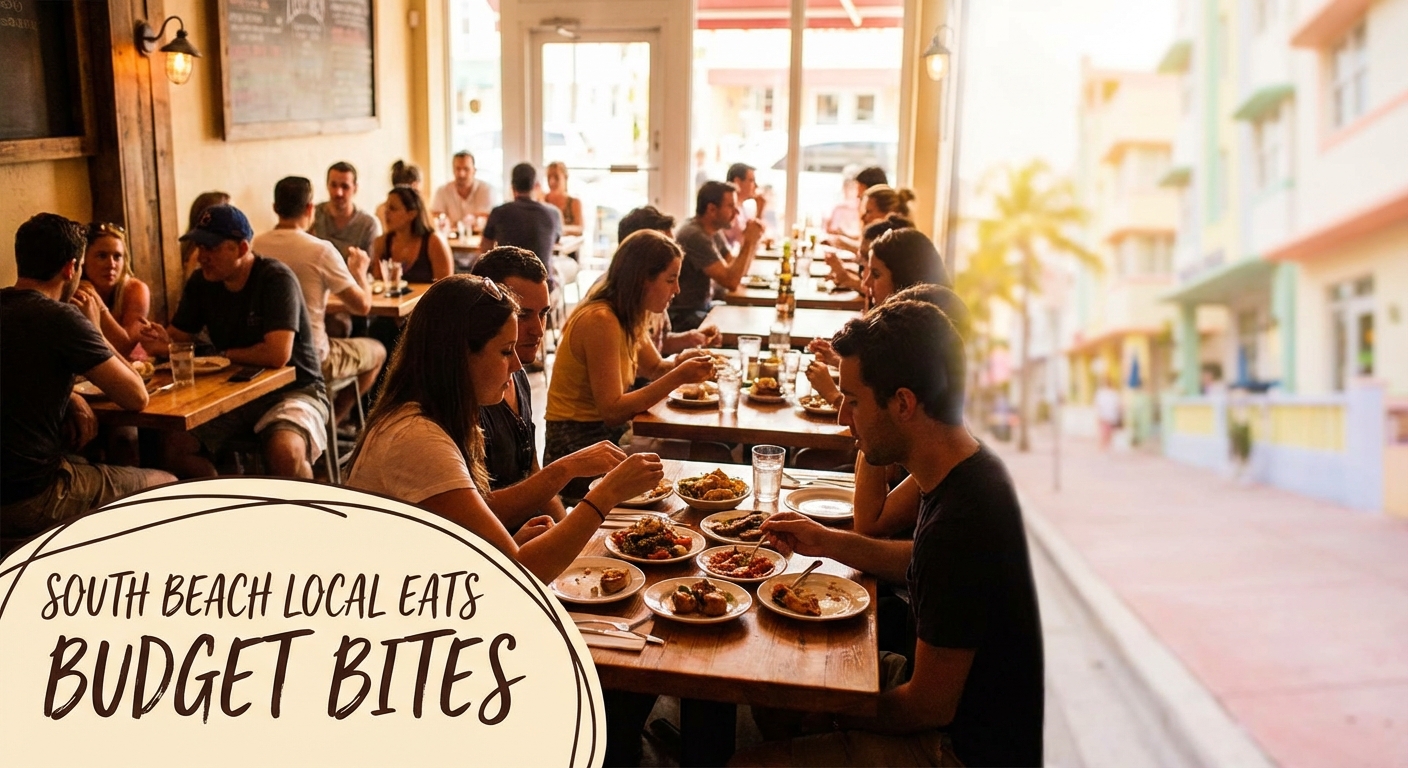
Hawker centers are Singapore’s gift to budget travelers. These government-run food halls house dozens of stalls selling everything from chicken rice to Indian rojak.
The closest major hawker center to South Beach is Bugis Street Food Centre on Albert Street. It’s a short walk and completely unpretentious. Stalls open early, around 7am, and most dishes cost SGD 3 to 5.
Try the char kway teow at the corner stall. The uncle running it has been there for 20 years. His version has that smoky wok breath flavor you can’t fake.
Golden Mile Food Centre on Beach Road is another solid option. It specializes in Thai and Southeast Asian food because of the neighborhood’s history. You’ll find boat noodles, som tam, and grilled meats at prices lower than what you’d pay in Bangkok.
Albert Centre Market and Food Centre sits just behind Bugis Junction. The ground floor has wet market stalls, but head upstairs for the food. The Hainanese chicken rice there consistently makes local best-of lists, and a plate costs SGD 3.50.
Coffee shops are not what you think
In Singapore, a coffee shop (or kopitiam) isn’t Starbucks. It’s a neighborhood institution where multiple food vendors operate under one roof, usually with open-air seating and ceiling fans.
These places serve breakfast, lunch, and dinner. A typical meal runs SGD 4 to 6. The quality varies by stall, not by location, so watch what locals order.
Look for coffee shops on Ophir Road, Middle Road, and the side streets off Beach Road. They’re everywhere, marked by clusters of plastic stools and the smell of brewing kopi.
Order economical rice (also called cai png). You point at dishes displayed in metal trays, choose three or four items, and they pile it onto rice. The auntie calculates your price based on what you took. Most plates cost SGD 3 to 5.
The system rewards experimentation. Try the sambal kang kong, curry vegetables, braised pork belly, or fried egg. You’re tasting home-cooked Singaporean and Chinese food at canteen prices.
Timing your meals saves money
Eat when locals eat and you’ll get better value. Many coffee shops and hawker stalls offer breakfast sets before 10am. You’ll get kaya toast, soft-boiled eggs, and coffee for around SGD 4.
Lunch happens between noon and 2pm. Office workers flood the area, and stalls prepare their freshest batches. Some places offer lunch specials or combo deals during this window.
Dinner starts early, around 6pm. Go before 7pm for shorter queues and food that hasn’t been sitting under heat lamps.
Late-night options exist but are limited. A few 24-hour coffee shops on Beach Road serve supper crowds. Prices stay the same, but selection narrows after 10pm.
Street food that won’t wreck your budget
Street food in Singapore isn’t technically on the street anymore. Health regulations moved most vendors into hawker centers decades ago. But the spirit remains.
Here’s what to hunt for:
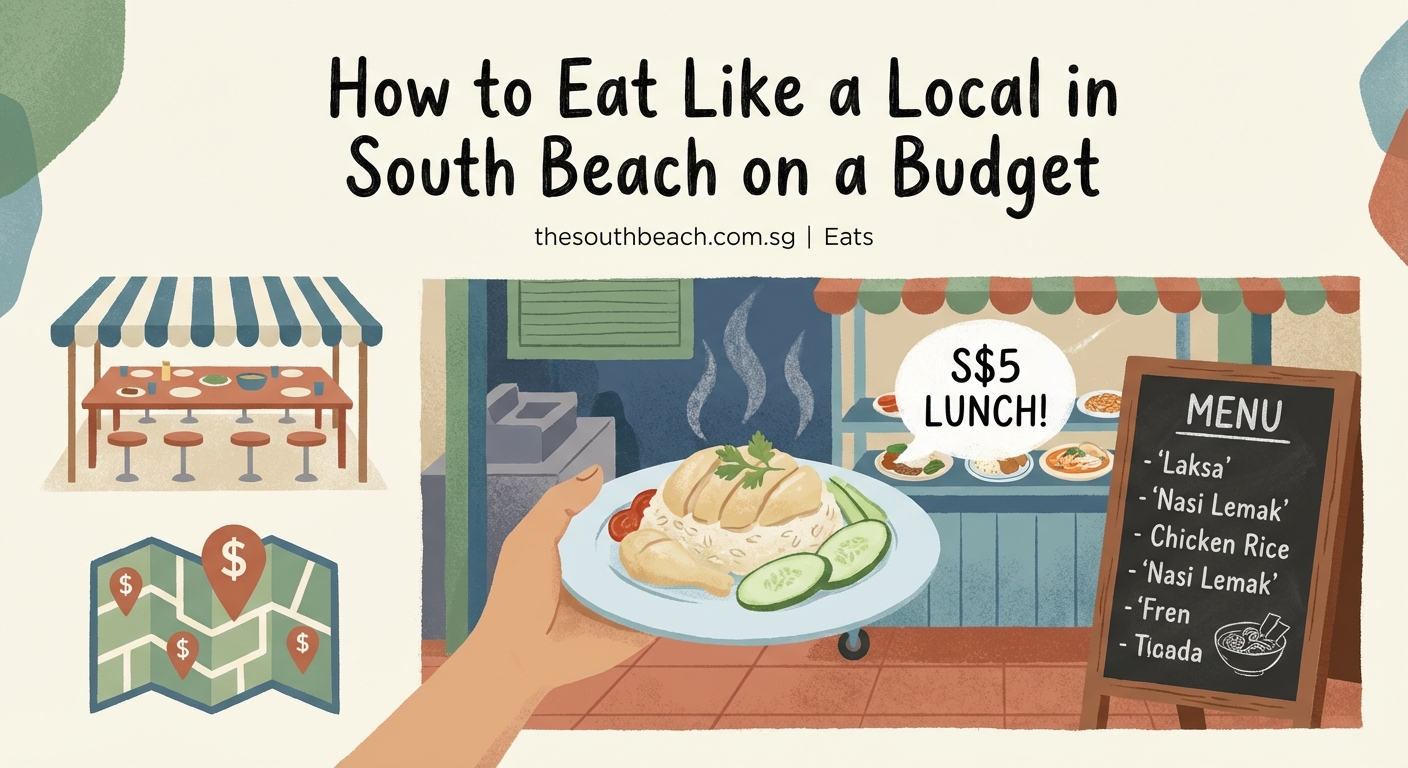
- Chicken rice: Singapore’s national dish, usually SGD 3.50 to 5 for a plate
- Laksa: Spicy coconut noodle soup, around SGD 4 to 6
- Char kway teow: Stir-fried rice noodles with egg and Chinese sausage, SGD 4 to 5
- Roti prata: Indian flatbread with curry, SGD 1.50 to 3 depending on fillings
- Nasi lemak: Coconut rice with sambal, fried chicken or fish, and egg, SGD 3 to 5
- Hokkien mee: Dark soy noodles with prawns and squid, SGD 4 to 6
Each dish represents a different cultural influence. That’s the beauty of eating in Singapore. You can have Indian breakfast, Chinese lunch, and Malay dinner without changing neighborhoods.
How to eat at food courts without overpaying
Food courts look like hawker centers but are privately run, usually in malls. They’re cleaner, air-conditioned, and slightly more expensive. Still affordable, though.
Bugis Junction, Bugis+, and City Square Mall all have food courts within walking distance of South Beach. Expect to pay SGD 5 to 8 per meal.
The advantage is consistency. Food court vendors maintain stricter quality standards because they’re competing for repeat customers in a controlled environment.
Some food courts offer set meals or combo deals. Look for signs advertising lunch promotions. A drink and main dish combo might save you a dollar or two.
Don’t overlook the Muslim stalls. Halal food in Singapore is excellent and often cheaper than Chinese stalls because ingredients like chicken and mutton cost less than seafood.
Following the office workers
The best budget food indicator is a queue of people in business casual at noon. They’re not tourists. They eat here regularly because the food is good and affordable.
Watch where construction workers and delivery riders eat. They know the cheapest, most filling options because they’re on tight budgets too.
Avoid places with photo menus in multiple languages. That’s a tourist tax waiting to happen. Look for handwritten signs in Chinese or Malay with prices listed. Those places aren’t trying to attract foreigners, which means they’re pricing for locals.
Drinks cost less than you expect
Forget bottled water from 7-Eleven. Hawker centers and coffee shops sell drinks for SGD 1 to 1.50.
Order kopi (coffee with condensed milk), teh (milk tea), or barley water. These drinks are made fresh and cost a fraction of what cafes charge.
If you want cold drinks, add “peng” to your order. Kopi peng is iced coffee. Teh peng is iced tea.
Fresh sugar cane juice, lime juice, and soy milk are also available at most hawker centers for around SGD 1.50 to 2. They’re refreshing in Singapore’s heat and cheaper than soft drinks.
Sharing dishes stretches your dollar
Singaporean food culture encourages sharing. Order different dishes and split them. You’ll taste more variety and spend less per person.
This works especially well with rice and noodle dishes. One char kway teow and one fried rice can easily feed two people if you’re not ravenous.
Soups and curries are designed for sharing. A bowl of laksa might seem small, but paired with a plate of chicken rice, it becomes a full meal for two.
Some stalls offer larger portions for a small upcharge. Ask if they have “big” or “extra” versions. The price difference is usually 50 cents to a dollar, but you get significantly more food.
What to avoid if you’re watching costs
South Beach has plenty of expensive restaurants. They’re easy to spot and easier to skip.
Anything with table service and printed menus will cost 3 to 5 times what hawker food costs. Save those for special occasions, not daily eating.
Waterfront restaurants near Marina Bay charge premium prices for the view. The food isn’t necessarily better. You’re paying for ambiance, not flavor.
Western food in Singapore is generally overpriced compared to local cuisine. A mediocre burger costs SGD 15 while excellent chicken rice costs SGD 4. Do the math.
Bubble tea shops are everywhere, but they add up fast at SGD 5 to 7 per drink. Stick to traditional drinks at hawker centers if you’re counting pennies.
Understanding the pricing system
Most hawker stalls and coffee shops display prices on signs. If you don’t see prices, ask before ordering. It’s perfectly normal.
Some stalls price by weight (for economical rice) or by ingredients (for noodle soups with add-ons). The vendor will tell you the total before serving.
Cash is still king at hawker centers, though many now accept PayNow or GrabPay. Carry small bills. Stall owners appreciate exact change.
Tipping isn’t expected or required. The price you see is what you pay.
Making a meal plan that works
Here’s a realistic daily budget breakdown for eating in South Beach:
| Meal | Location | Estimated Cost |
|---|---|---|
| Breakfast | Coffee shop kaya toast set | SGD 4 |
| Lunch | Hawker center chicken rice | SGD 4 |
| Dinner | Food court laksa | SGD 6 |
| Drinks | Kopi and barley water | SGD 2.50 |
| Total | SGD 16.50 |
That’s roughly USD 12 per day for three solid meals and drinks. You can eat well in South Beach on SGD 20 (USD 15) per day if you stick to local spots.
Splurge one meal every few days if you want. The money you save on other meals gives you room for an occasional restaurant dinner without blowing your budget.
Learning basic food vocabulary helps
You don’t need fluent Mandarin or Malay, but a few words make ordering easier and show respect.
- “Da bao” means takeaway
- “Mai” means don’t want (useful for saying “mai chili” if you can’t handle spice)
- “Jia” means add (like “jia egg” for extra egg)
- “Kosong” means plain or without filling (for roti prata)
- “Peng” means iced
- “Gao” means thick or strong (for coffee)
- “Siew dai” means less sugar
Stall owners appreciate the effort even if your pronunciation is rough. They’ll help you figure it out.
Navigating dietary restrictions on a budget
Vegetarian food is easy to find and affordable. Indian stalls serve vegetarian roti prata, dosai, and vegetable curries. Chinese vegetarian stalls offer rice and noodle dishes without meat.
Look for the “vegetarian” sign in English or the Chinese characters 素食. Many hawker centers have at least one vegetarian stall.
Halal food is everywhere. Muslim stalls are clearly marked. Malay cuisine is predominantly halal, and many Chinese and Indian vendors also offer halal options.
Gluten-free is trickier. Rice dishes work, but soy sauce (which contains wheat) is common. Ask vendors about ingredients. Some will accommodate if you explain clearly.
Local food blogger Sarah Tan says: “The best cheap eats aren’t hidden. They’re right in front of you, filled with locals eating lunch. If you see a queue at noon and everyone’s speaking Singlish, that’s where you want to be. Tourist-friendly places are empty at peak hours because locals know better.”
Grocery stores and supermarkets as backup
Sometimes you just want a simple meal without sitting down. FairPrice and Cold Storage supermarkets near South Beach sell ready-to-eat meals, sandwiches, and snacks.
The prepared food section has sushi, salads, and local dishes for SGD 3 to 6. It’s not as good as hawker food, but it’s convenient.
7-Eleven stores sell onigiri, sandwiches, and instant noodles. You can eat well enough for SGD 5 to 7 if you’re in a rush.
Breadtalk and other bakery chains offer savory buns and pastries for SGD 1.50 to 3. They make decent breakfast or snack options.
Apps that help you find cheap eats
Burpple is Singapore’s food Instagram. Search by location and price range. Users post photos and reviews of hawker stalls and budget eateries.
Google Maps works well for finding nearby coffee shops and hawker centers. Read the reviews, but trust the ones written in Singlish more than tourist reviews.
HungryGoWhere lists hawker centers and includes user ratings. The app shows opening hours and locations.
GrabFood and Foodpanda offer delivery, but that adds fees. Use them to browse menus and prices, then visit in person to save money.
Weather affects where you eat
Singapore is hot and humid year-round, with frequent afternoon rain. That matters for budget eating.
Air-conditioned food courts become more appealing during midday heat. The extra dollar or two feels worth it when you’re melting.
Hawker centers with good ventilation are more comfortable than enclosed ones. Look for places with high ceilings and open sides.
During rain, covered hawker centers get crowded fast. Either wait out the storm or embrace the chaos and grab whatever seat you can find.
Weekend eating differs from weekdays
Some hawker stalls close on Sundays or Mondays. Others only open on weekends. Check before making plans.
Weekend crowds are heavier at popular stalls. Expect longer waits, especially during brunch hours.
Some places raise prices slightly on weekends, though this is less common at hawker centers than at restaurants.
Night markets and pasar malam (temporary street markets) sometimes pop up on weekends. They offer snacks and light meals at budget prices, though not always near South Beach.
Your real food education starts here
Reading about cheap eats only gets you so far. The actual learning happens when you sit down at a plastic table, order something you can’t pronounce, and taste it for the first time.
You’ll make mistakes. You’ll order too much or too little. You’ll accidentally get the spicy version when you meant to ask for mild. That’s fine. Every local has been there.
The food scene in South Beach rewards curiosity and punishes timidity. The best meals come from taking chances on stalls that don’t look fancy but smell amazing. Trust your nose, watch what locals order, and don’t be afraid to point at someone else’s plate and say “I’ll have that.”
Your budget will thank you, and your taste buds will too.