 By eric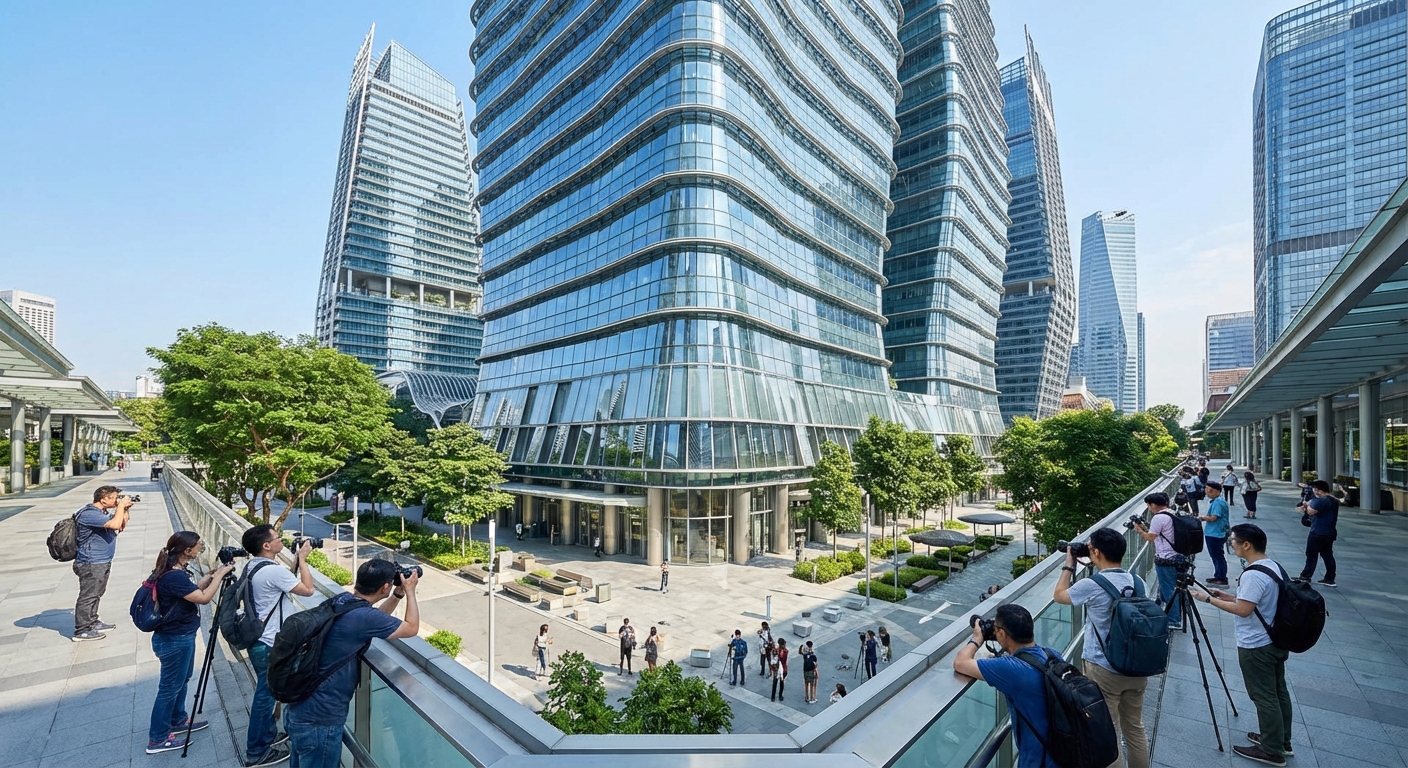
Standing at the edge of Singapore’s civic district, South Beach Tower rises like a sculptural ribbon against the skyline. Its curved glass facade catches light in ways that change throughout the day, creating a visual spectacle that draws photographers from around the world. This isn’t just another high-rise. It’s a landmark that redefined what modern architecture could look like in Southeast Asia.
South Beach Tower Singapore stands as a 45-story mixed-use development designed by Foster + Partners and Architects 61. Its distinctive curved glass exterior, prime Civic District location, and innovative sustainability features make it one of Singapore’s most recognizable buildings. The tower houses luxury residences, premium office space, and connects to South Beach Avenue’s retail and dining precinct.
What makes South Beach Tower stand out
The building’s most striking feature is its flowing, wave-like glass curtain wall. Unlike traditional rectangular towers, South Beach Tower curves in three dimensions. The facade consists of over 16,000 glass panels, each one uniquely shaped to create the building’s organic form.
This wasn’t just an aesthetic choice. The curved design serves multiple purposes. It maximizes views for residents and office tenants. It reduces wind loads on the structure. And it creates ever-changing reflections that make the building photograph differently depending on time of day and weather conditions.
The tower reaches 190 meters into the sky, making it visible from Marina Bay, the Singapore River, and Fort Canning Park. Its position at the intersection of Beach Road and Nicoll Highway places it at a geographic pivot point between the historic civic district and the modern Marina Bay financial center.
Architecture and design philosophy
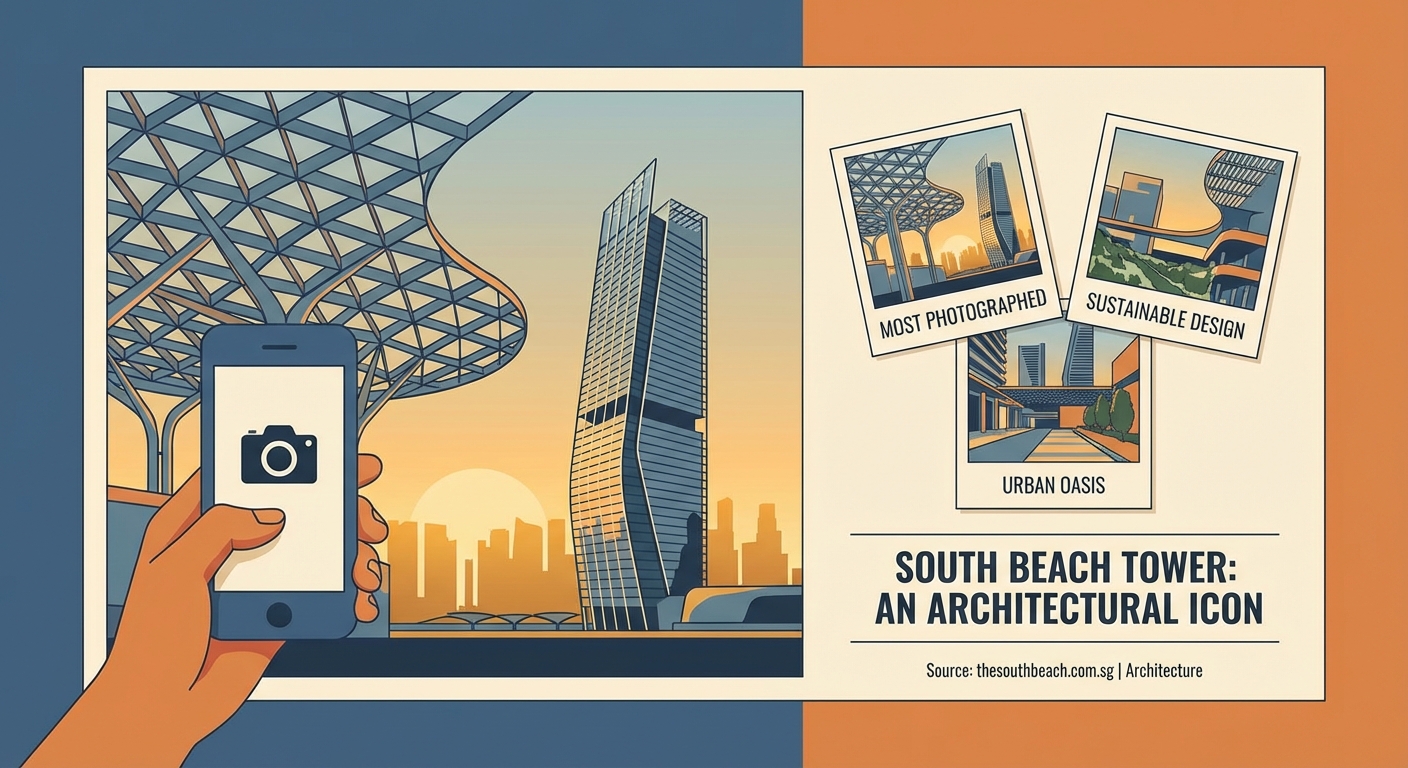
Foster + Partners, the British firm behind iconic structures like Apple Park and the Reichstag dome, led the design. They partnered with local firm Architects 61 to create something that responded to Singapore’s tropical climate and urban context.
The design process took several years. The architects studied Singapore’s sun angles, prevailing winds, and rain patterns. They analyzed how light would interact with glass at different times of year. They modeled pedestrian flows around the base of the tower.
The result is a building that performs as well as it looks. The curved glass facade reduces solar heat gain compared to flat glass walls. Strategic shading elements protect west-facing surfaces during afternoon sun. High-performance glazing blocks infrared radiation while allowing visible light through.
Inside, floor plates are column-free, giving tenants maximum flexibility. Ceiling heights exceed standard office dimensions. Natural ventilation systems reduce reliance on air conditioning during cooler months.
Location and surroundings
South Beach Tower sits in one of Singapore’s most historically significant neighborhoods. The Civilian War Memorial stands just across Beach Road. The former City Hall and Supreme Court buildings, now the National Gallery Singapore, are a five-minute walk away. Raffles Hotel, Singapore’s most famous colonial landmark, is even closer.
This location creates interesting contrasts. Victorian-era shophouses sit next to contemporary towers. Narrow heritage lanes open onto wide modern boulevards. The juxtaposition makes the area visually rich and architectually diverse.
The tower forms part of the larger South Beach development, which includes the South Beach Hotel, retail spaces along South Beach Avenue, and landscaped public areas. The entire complex occupies the former Golden Mile Complex site and integrates two conserved heritage buildings into its design.
Transportation access is exceptional. Esplanade MRT station connects to the development through an underground link. Multiple bus routes serve Beach Road. The location is walkable to Raffles Place, Marina Bay Sands, and the Esplanade performing arts center.
Residential and commercial spaces
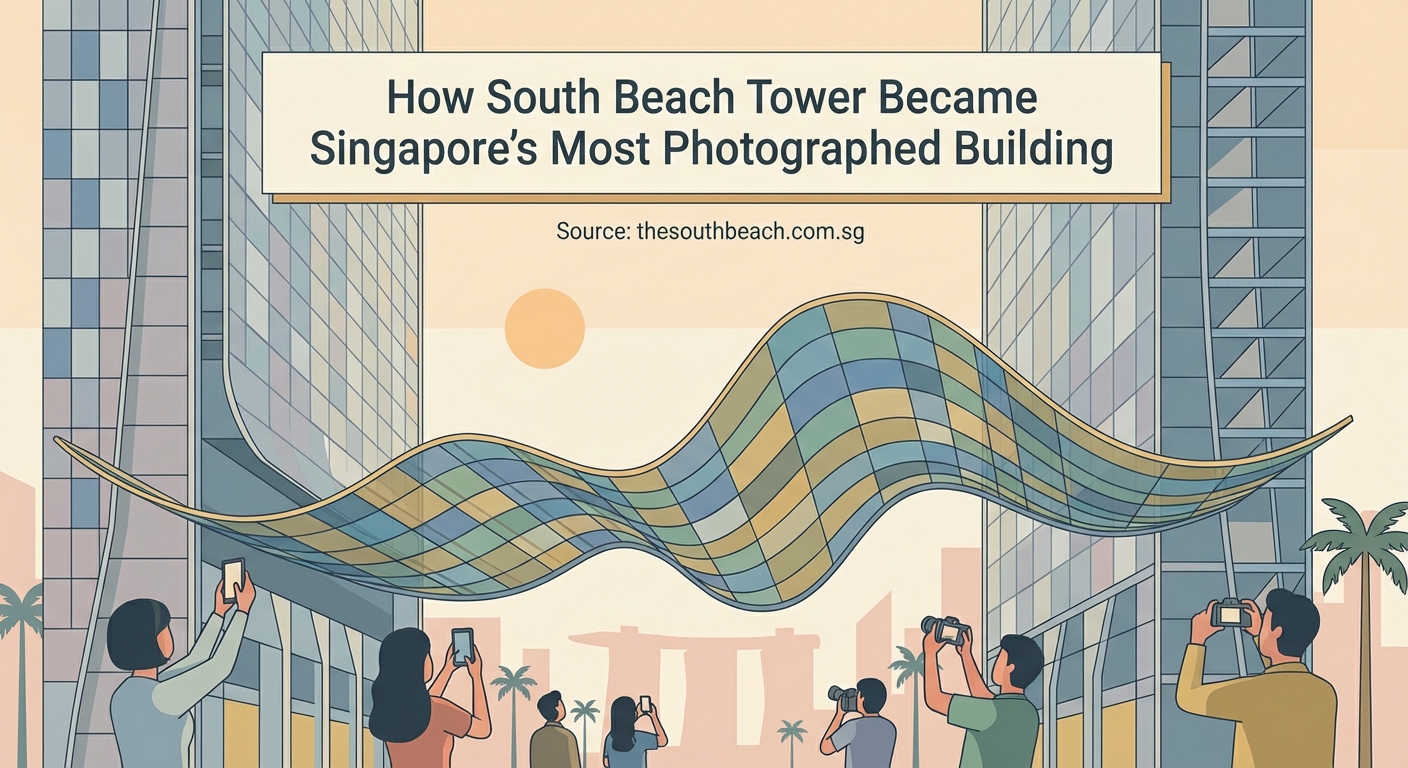
The upper floors house luxury residential units. These apartments offer floor-to-ceiling windows that take full advantage of the building’s height and curved facade. Views span from the harbor to the city center to the green slopes of Fort Canning.
Residential amenities include a sky garden, swimming pool, fitness center, and private dining rooms. The sky garden, located on an intermediate floor, creates a green oasis with tropical plants and seating areas.
Office space occupies the middle floors. Tenants include financial services firms, technology companies, and professional services practices. The flexible floor plates accommodate both open-plan layouts and traditional office configurations.
Ground-level spaces connect to South Beach Avenue, a retail and dining corridor that runs through the development. Restaurants, cafes, and shops activate the pedestrian realm, creating street life that extends into evening hours.
Photography and visual appeal
Photographers love South Beach Tower for several reasons. The curved facade creates leading lines that draw the eye upward. Reflections in the glass change constantly, offering different compositions throughout the day. The building’s position allows for shots that include both modern and historic elements.
Best photography times:
- Early morning, when soft light hits the east-facing facade
- Late afternoon, when the setting sun creates dramatic reflections
- Blue hour after sunset, when the building’s interior lighting contrasts with the darkening sky
- Rainy days, when clouds and wet surfaces add texture and drama
Popular vantage points include the open plaza at the tower’s base, the pedestrian bridge connecting to Esplanade MRT, and elevated positions in nearby buildings. Each location offers a different perspective on the building’s sculptural form.
The tower has appeared in countless Instagram posts, architecture publications, and travel guides. Its distinctive silhouette makes it instantly recognizable, even in wide cityscape shots.
Sustainability features
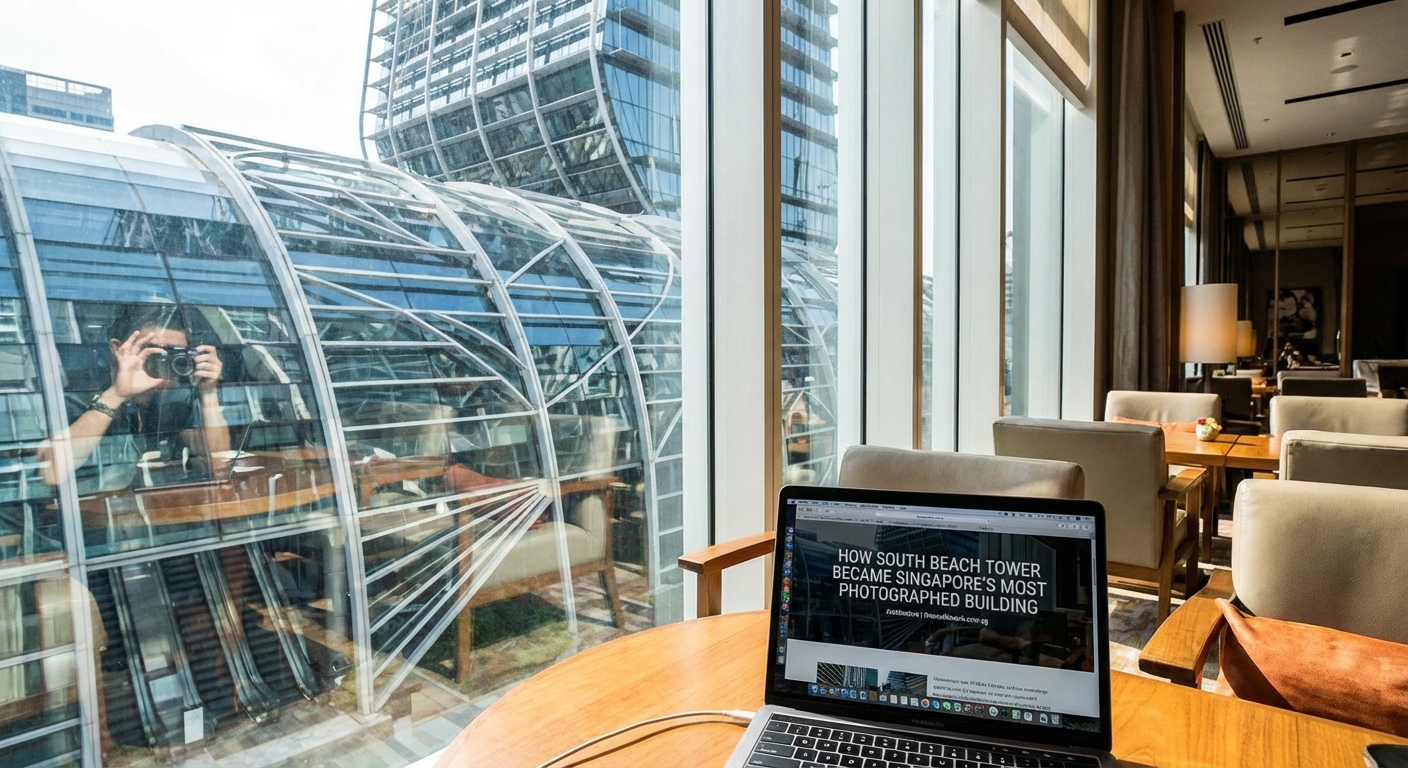
South Beach Tower achieved Green Mark Platinum certification, Singapore’s highest sustainability rating. The building incorporates multiple environmental strategies:
- High-performance glazing reduces cooling loads
- Rainwater harvesting systems supply irrigation and toilet flushing
- Motion sensors and daylight harvesting minimize artificial lighting
- Regenerative elevators capture energy during descent
- Green roofs and vertical gardens reduce urban heat island effect
The curved facade itself contributes to energy efficiency. By reducing direct sun exposure on glass surfaces, it lowers the building’s cooling requirements. Computer modeling showed the curved design reduced energy consumption by approximately 15% compared to a conventional rectangular tower of similar size.
Natural ventilation strategies allow fresh air into common areas during cooler periods. This reduces reliance on mechanical systems and improves indoor air quality. Operable windows in residential units give occupants control over their environment.
Comparing architectural approaches
| Aspect | South Beach Tower | Traditional High-Rise | Impact |
|---|---|---|---|
| Facade design | Curved, organic form | Rectangular, flat walls | Creates unique visual identity |
| Glass panels | 16,000+ custom pieces | Standardized units | Increases construction complexity |
| Energy strategy | Passive shading, high-performance glazing | Standard curtain wall | Reduces cooling loads 15% |
| Floor plates | Column-free flexibility | Regular column grid | Maximizes usable space |
| Heritage integration | Preserves colonial buildings | Often demolishes old structures | Maintains neighborhood character |
This comparison shows how South Beach Tower balances innovation with practical considerations. The design is ambitious but buildable. It’s distinctive but functional. It respects context while creating something new.
Planning your visit
South Beach Tower is accessible to the public at ground level. The retail areas, restaurants, and public spaces welcome visitors throughout the day. While residential and office floors are private, you can experience the building’s scale and design from street level.
Getting there:
- Take the MRT to Esplanade station (Circle Line)
- Use Exit F and follow signs to South Beach
- Walk through the underground connection to reach the tower
The surrounding area offers plenty to see. You can easily combine a visit to South Beach Tower with stops at National Gallery Singapore, the Padang, or Marina Bay. The entire civic district is compact and walkable.
For photographers, arrive early to avoid crowds. Weekday mornings tend to be quieter than weekends. The plaza at the tower’s base provides unobstructed views of the facade. Bring a wide-angle lens to capture the building’s full height.
“South Beach Tower demonstrates that sustainable design and striking aesthetics aren’t mutually exclusive. The building performs exceptionally well while creating a powerful visual statement that enhances Singapore’s skyline.” — Architecture critic reviewing the completed project
Practical details for visitors
South Beach Avenue, the retail corridor within the development, includes restaurants serving various cuisines. Options range from casual cafes to fine dining establishments. Many venues offer outdoor seating with views of the tower and surrounding area.
Parking is available in the basement levels, with entrances on Beach Road and Nicoll Highway. Rates follow standard commercial parking pricing. Motorcycle and bicycle parking are also provided.
The development includes public restrooms, seating areas, and sheltered walkways. Air-conditioned connections link to adjacent buildings, allowing you to move through the area comfortably even during hot weather.
Nearby attractions worth visiting:
- National Gallery Singapore (5-minute walk)
- Raffles Hotel Singapore (3-minute walk)
- Esplanade Theatres on the Bay (7-minute walk)
- Marina Bay Sands (15-minute walk)
- Singapore River promenade (10-minute walk)
This concentration of attractions makes South Beach Tower an ideal starting point for exploring central Singapore.
Design influence and recognition
Since its completion, South Beach Tower has influenced architectural thinking in Singapore and Southeast Asia. The project demonstrated that large-scale developments could incorporate heritage buildings rather than replacing them. It showed that ambitious formal gestures could coexist with practical sustainability goals.
The tower has received recognition from architectural organizations and design publications. It appears regularly in lists of Singapore’s most significant contemporary buildings. Architecture students study it as an example of how to respond to tropical climates through building form.
The success of South Beach Tower has encouraged other developers to invest in distinctive architectural design. Subsequent projects in Singapore have pushed formal boundaries while maintaining the high performance standards the city demands.
Why this building matters to Singapore
South Beach Tower represents a moment when Singapore’s architecture shifted from purely functional to culturally ambitious. Earlier generations of buildings prioritized efficiency and economy. More recent projects, including South Beach Tower, demonstrate that Singapore can compete with global cities in architectural innovation.
The building’s location in the civic district gives it symbolic importance. It sits among structures that represent Singapore’s colonial past, its post-independence development, and its contemporary global status. South Beach Tower adds another layer to this architectural narrative.
For visitors, the tower provides a memorable visual anchor. Its distinctive form makes it easy to navigate by. Its presence on the skyline signals that you’re in Singapore’s historic core, where old and new coexist in productive tension.
The building works at multiple scales. From a distance, it’s a sculptural object that enhances the skyline. At street level, it creates active, pedestrian-friendly spaces. Inside, it provides comfortable, efficient environments for living and working. This multi-scale success makes it a valuable urban asset.
Experiencing architecture in context
South Beach Tower Singapore rewards careful observation. Walk around the building to see how its form changes from different angles. Notice how the glass reflects surrounding buildings, clouds, and changing light. Pay attention to how the curved facade creates a sense of movement even though the building is static.
The tower demonstrates that great architecture serves multiple purposes simultaneously. It provides shelter and space for human activities. It contributes to the city’s visual character. It responds to environmental conditions. It creates economic value. And it inspires people to think differently about what buildings can be.
Whether you’re an architecture professional studying contemporary design, a photographer seeking compelling subjects, or a tourist wanting to understand Singapore’s urban character, South Beach Tower offers something worth your attention. Its combination of bold form, technical sophistication, and urban integration makes it a building that rewards both casual observation and serious study.