 By eric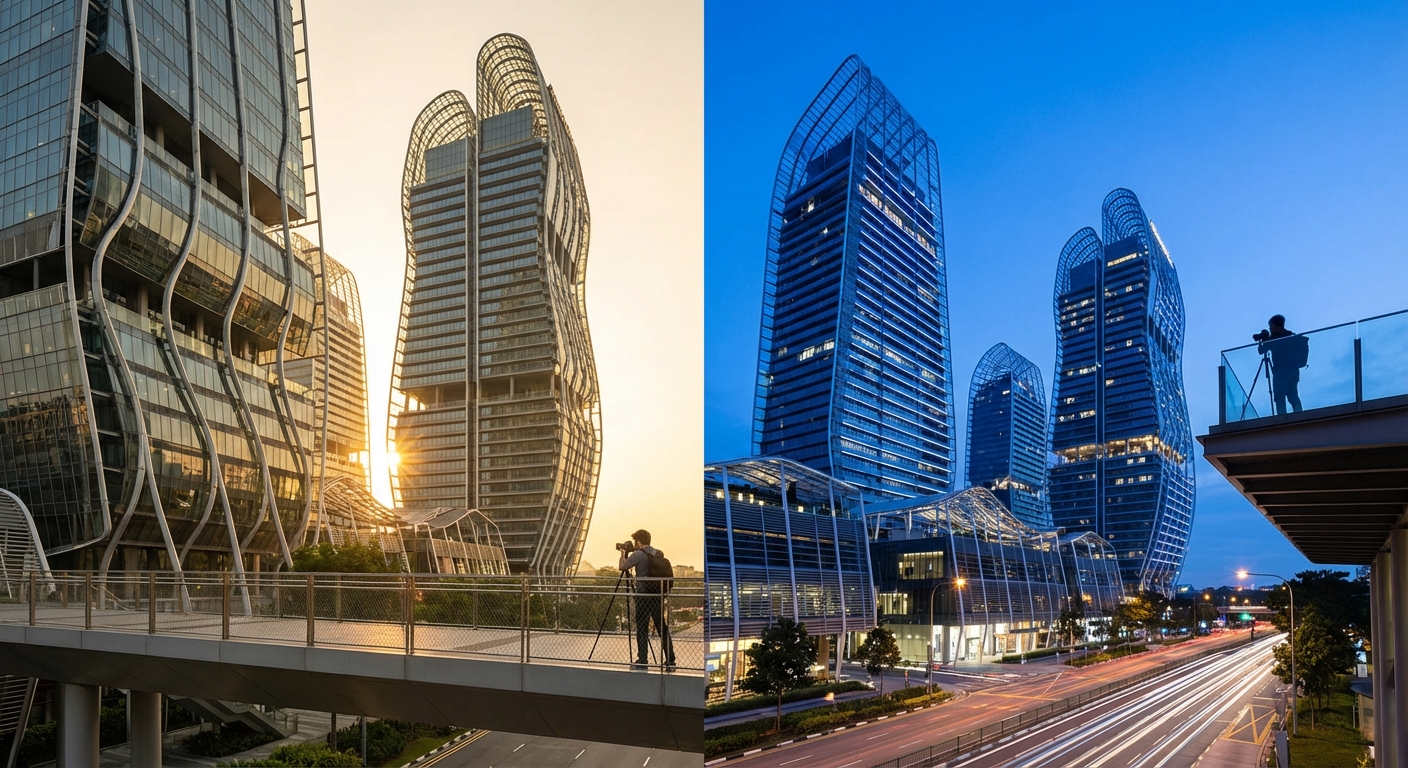
Photographers visiting Singapore often overlook one of the city’s most photogenic architectural marvels. South Beach stands as a testament to contemporary design, where heritage buildings meet cutting-edge innovation. The interplay of light, glass, and structure creates endless opportunities for stunning shots.
South Beach in Singapore offers exceptional architectural photography opportunities through its blend of restored heritage buildings and modern Foster + Partners design. Golden hour lighting between 6:30am and 8:00am provides optimal conditions. The wave-like canopy, geometric patterns, and vertical gardens create diverse compositions. Weekday mornings minimize crowds while maximizing natural light contrast across the complex’s distinctive facades.
Understanding the architectural canvas
South Beach represents a fascinating collision of old and new. The development preserves three heritage buildings while wrapping them in a contemporary steel and glass canopy designed by Foster + Partners. This juxtaposition gives photographers a rare chance to capture historical conservation within modern innovation.
The signature wave-like canopy stretches across the complex like a metallic ribbon. During different times of day, it transforms completely. Morning sun creates sharp geometric shadows. Afternoon light softens the steel into warm tones. Evening brings out the structure’s dramatic silhouette against the tropical sky.
The restored heritage buildings include the former South Beach Development building, Gateway Building, and Stamford Court. Each structure tells a different story through its facade. Colonial-era details contrast beautifully with the sleek contemporary additions surrounding them.
Best times for capturing light and shadow
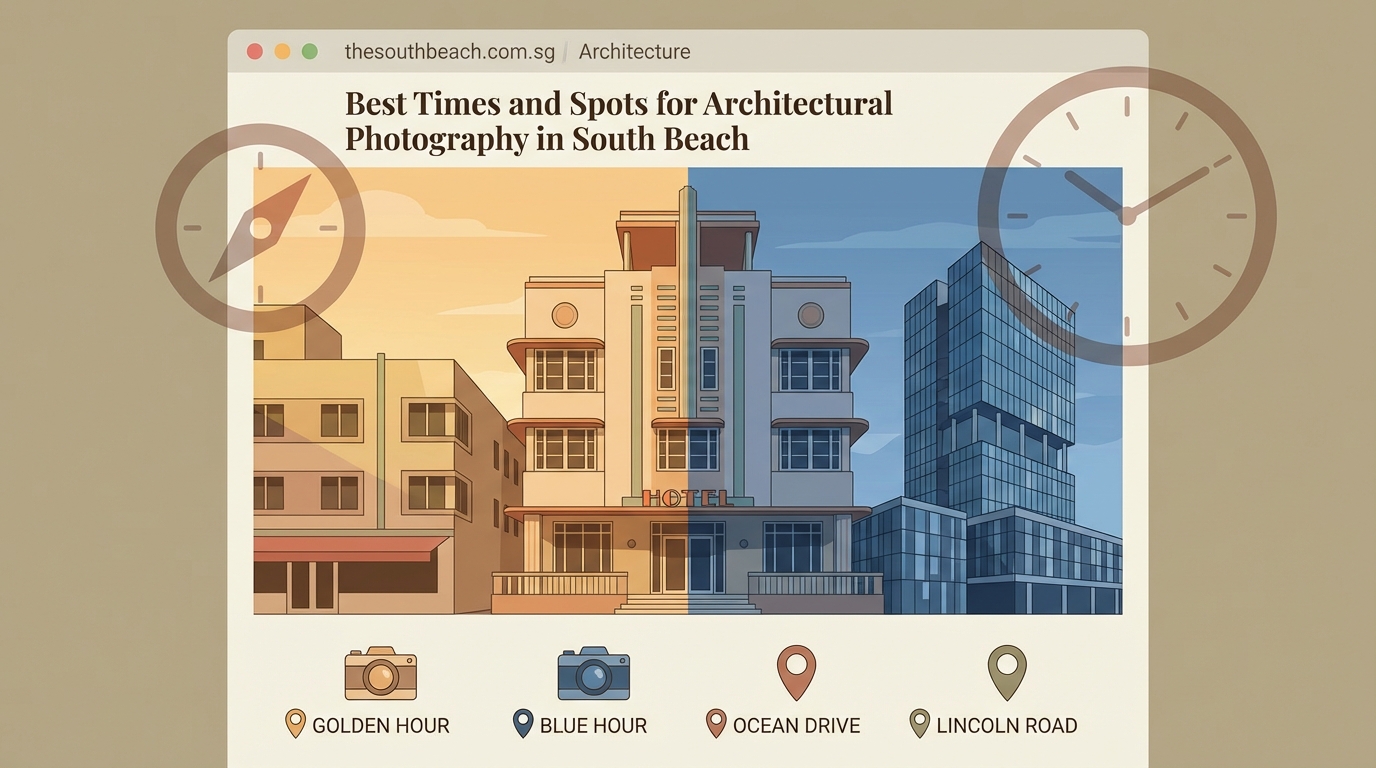
Timing makes or breaks architectural photography. South Beach rewards early risers with exceptional conditions.
Morning golden hour (6:30am to 8:00am) provides the most dramatic lighting. The low angle sun illuminates the eastern facades while casting long shadows across the courtyard. The steel canopy catches warm light, creating a golden glow that contrasts with the cool shadows below.
Mid-morning (9:00am to 11:00am) brings even illumination across the complex. This works well for detail shots and interior-exterior transitions. The harsh tropical sun hasn’t peaked yet, so you avoid blown-out highlights.
Blue hour (7:00pm to 7:45pm) transforms the building into a glowing beacon. Interior lights activate while the sky retains deep blue tones. The canopy becomes luminous, and the glass facades reflect the surrounding cityscape.
Overcast days deserve attention too. Cloud cover acts as a natural diffuser, eliminating harsh shadows and allowing you to capture the building’s form without extreme contrast. This weather suits black and white architectural photography particularly well.
Essential shooting locations around the complex
Street level perspectives
Beach Road offers the classic frontal view. Stand across the street to capture the full sweep of the canopy. A wide-angle lens (16-24mm) captures the entire structure, while a standard zoom (24-70mm) lets you isolate specific elements.
The pedestrian walkway along Nicoll Highway provides elevated angles. You can shoot slightly downward into the courtyard, revealing the canopy’s undulating form from above. This vantage point works beautifully during evening hours when interior lighting creates patterns below.
Interior courtyard compositions
The ground level courtyard beneath the canopy presents unique challenges and opportunities. Look up to capture the geometric pattern of the steel structure against the sky. A polarizing filter reduces glare from the glass panels and deepens sky tones.
The vertical gardens integrated into the design add organic elements to otherwise rigid geometry. These living walls photograph best in soft morning light when moisture still clings to the leaves.
Heritage building details
Each restored building deserves individual attention. The colonial architecture features ornate details that contrast sharply with the modern additions. Get close with a 50mm or 85mm lens to isolate decorative elements, window patterns, and textural surfaces.
The transition zones where old meets new create compelling compositions. Frame shots that show both architectural languages in conversation, demonstrating how contemporary design can honor historical context.
Camera settings and technical considerations

| Shooting Scenario | Aperture | ISO | Shutter Speed | Notes |
|---|---|---|---|---|
| Golden hour exteriors | f/8 to f/11 | 100-400 | 1/125 to 1/500 | Maximize depth of field |
| Blue hour facades | f/5.6 to f/8 | 800-1600 | 1/30 to 1/125 | Use tripod if possible |
| Interior courtyard | f/4 to f/5.6 | 400-800 | 1/60 to 1/250 | Balance ambient and artificial light |
| Detail close-ups | f/2.8 to f/4 | 100-200 | 1/250 to 1/1000 | Shallow depth isolates subjects |
| Overcast conditions | f/8 to f/11 | 200-400 | 1/125 to 1/500 | Even lighting allows flexibility |
A sturdy tripod becomes essential for blue hour and interior shots. The combination of low light and the need for sharp detail at small apertures demands stability. Bring a cable release or use your camera’s timer to eliminate shake.
Shoot in RAW format. The high contrast between bright sky and shadowed areas requires significant post-processing latitude. RAW files preserve detail in highlights and shadows that JPEGs compress away.
Consider bracketing exposures for high-contrast scenes. Shoot three to five frames at different exposures, then blend them later. This technique captures detail across the entire tonal range, from the brightest glass reflections to the deepest shadows beneath the canopy.
Composition strategies that work
The canopy’s wave pattern creates natural leading lines. Position yourself so the curves guide the viewer’s eye through the frame. These lines can point toward heritage buildings, draw attention to architectural details, or simply create dynamic movement across the image.
Symmetry appears throughout the complex. The central courtyard offers perfectly balanced compositions when shot from the middle. Use the grid overlay on your camera to ensure level horizons and centered subjects.
Reflections multiply your creative options. The glass facades mirror surrounding buildings, sky, and even other parts of South Beach itself. Shoot at angles that capture these reflections alongside the actual structures for layered, complex images.
“The best architectural photography reveals how people interact with space. Wait for a lone figure walking beneath that massive canopy. The scale comparison transforms a building portrait into a human story.” — Professional architectural photographer based in Singapore
Include human elements when appropriate. A single person walking through the frame provides scale and life. Time your shot so they occupy a position that enhances rather than distracts from the architecture.
Common mistakes photographers make
Forgetting to check for construction or events. South Beach hosts public activities that can obstruct your shots. Check ahead if you’re planning a specific composition.
Ignoring vertical perspective correction. Tilting your camera upward creates converging vertical lines that make buildings appear to fall backward. Either keep your camera level or plan to correct perspective distortion in post-processing.
Shooting only during tourist hours. Mid-afternoon brings crowds and harsh light. Early morning offers solitude and superior conditions.
Neglecting the surrounding context. South Beach sits within a dense urban environment. Sometimes including neighboring buildings or street life creates more interesting images than isolating the subject completely.
Over-processing HDR images. The temptation to recover every shadow and highlight can produce unnatural results. Maintain some contrast and let shadows be shadows.
Gear recommendations for the shoot
Your camera body matters less than your lenses. Any modern mirrorless or DSLR camera handles architectural work. Focus instead on glass quality.
Essential lenses include:
- Wide-angle zoom (16-35mm or similar) for capturing the full structure
- Standard zoom (24-70mm) for versatile framing options
- Prime lens (50mm or 85mm) for detail work and low-light situations
A polarizing filter cuts reflections and deepens sky tones. This single accessory dramatically improves outdoor architectural shots. Rotate it while looking through the viewfinder to see the effect.
Bring extra batteries. Reviewing images on the LCD, using live view, and shooting in cold air-conditioned spaces all drain power faster than normal shooting.
A small step stool or ladder can help you shoot over barriers or achieve slightly elevated perspectives. Check local regulations before using one in public spaces.
Weather and seasonal considerations
Singapore’s tropical climate means consistent conditions year-round. You won’t encounter dramatic seasonal light changes like temperate regions experience.
Rain creates opportunities rather than obstacles. Wet surfaces reflect light beautifully. The steel canopy glistens. Puddles mirror the architecture. Pack weather protection for your gear and embrace the conditions.
Haze occasionally affects visibility and color saturation. Check air quality reports before planning a shoot. Clear days after rain produce the most vibrant colors and sharpest contrast.
Humidity fogs lenses when moving between air-conditioned interiors and outdoor heat. Keep a microfiber cloth handy. Let your gear acclimate gradually when possible.
Post-processing approaches
Start with perspective correction. Straighten vertical lines so buildings appear upright rather than leaning. Most editing software includes dedicated tools for this adjustment.
Balance your exposure across the frame. Lift shadows to reveal detail beneath the canopy. Gently reduce highlights to preserve texture in bright sky or reflective glass.
Enhance architectural details through clarity and texture adjustments. These tools bring out surface qualities and structural elements without creating obvious halos or artifacts.
Consider converting some images to black and white. The strong geometric forms and high contrast at South Beach translate beautifully to monochrome. This approach emphasizes shape, line, and texture over color.
Maintain natural color balance. The steel canopy has a specific tone that shifts with light. Preserve these authentic qualities rather than forcing artificial color grades.
Planning your photography session
- Scout locations using online maps and images before arriving. Identify specific angles you want to capture.
- Arrive at least 30 minutes before your target shooting time. This allows you to set up, adjust to conditions, and wait for optimal light.
- Shoot systematically through your planned compositions. Start with wide establishing shots, then work toward details and alternative angles.
- Review images periodically to check exposure, focus, and composition. The LCD can mislead in bright conditions, so use the histogram.
- Stay flexible and respond to unexpected opportunities. Sometimes the best shots come from spontaneous moments rather than planned compositions.
- Allow extra time for experimentation. Try unconventional angles, extreme focal lengths, or creative techniques once you’ve captured your core shots.
Making the most of your visit
South Beach functions as a mixed-use development with hotels, restaurants, and retail spaces. This means you can combine photography with other activities. Shoot during optimal morning light, then enjoy breakfast at one of the ground-level cafes.
The complex connects directly to Esplanade and Nicoll Highway MRT stations. Easy access means you can visit multiple times without logistical headaches. Return during different conditions to build a comprehensive portfolio.
Respect private spaces and security guidelines. While most areas welcome photography, some zones may have restrictions. If staff ask about your activities, explain you’re capturing architectural details for personal use.
Consider how your images might serve different purposes. Wide shots work for travel portfolios. Detail images suit architectural studies. Human-scale compositions tell stories about urban life.
Turning buildings into compelling stories
South Beach architectural photography succeeds when you move beyond simple documentation. Look for the narrative within the structure. How does the canopy shelter the space below? What story do the heritage buildings tell alongside their modern neighbors?
Light transforms static architecture into dynamic subjects. Chase that transformation across different times and conditions. Build a series that shows the building’s many personalities rather than settling for a single definitive image.
The best photographs balance technical excellence with emotional resonance. Master your exposure, composition, and timing. Then push further to capture something that makes viewers pause and really see this remarkable structure. Your images can reveal what casual observers miss, showing South Beach as both an architectural achievement and a living urban space.