 By eric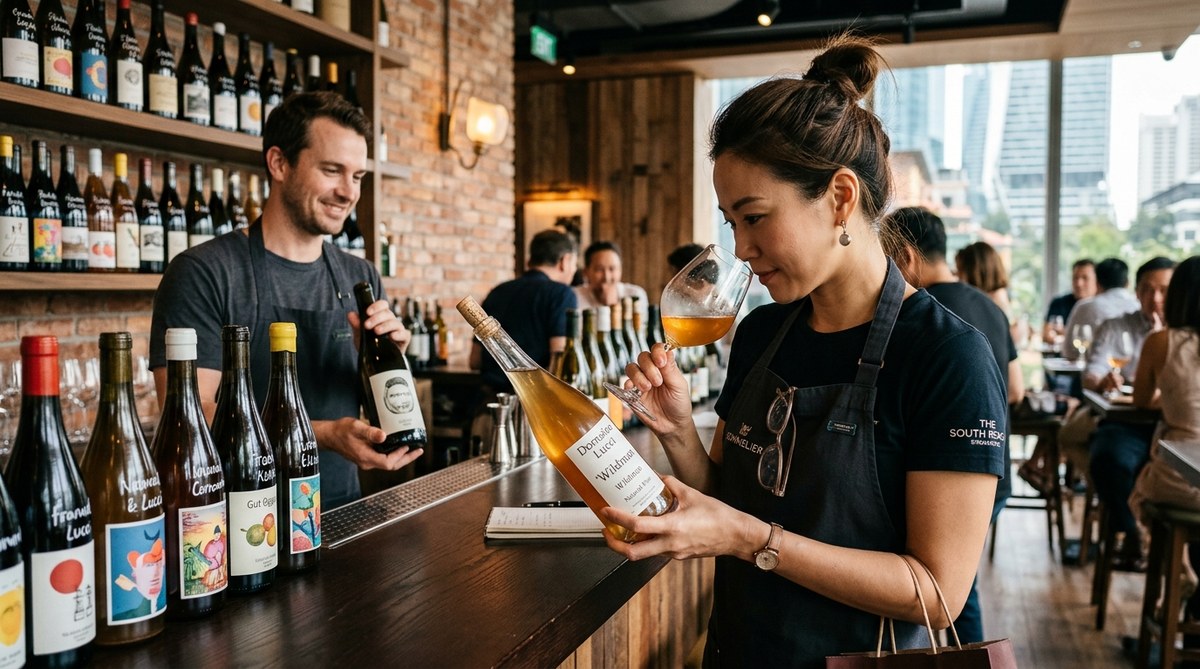
The shift happened quietly at first. A few bottles of pét-nat appeared on lists at Esplanade-adjacent spots. Then came the orange wines, the funky skin-contact reds, and the unfiltered ciders. Now, in 2026, the question among beverage directors isn’t whether to stock natural wine but where to find the most compelling selections. And more and more, the answer points to one district: South Beach. Singapore’s top sommeliers are gravitating toward South Beach natural wine bars not because of hype but because these venues offer something rare in the city’s fine dining ecosystem: a genuine dialogue between producer, pourer, and drinker.
South Beach’s natural wine bars are reshaping Singapore’s wine culture by combining low-intervention winemaking with sommelier-led hospitality. These venues emphasize transparency, terroir, and traceability over label prestige. For wine professionals, the district offers a concentrated corridor of bars where they can taste rare bottles, connect with importers, and refine their palates outside the formal restaurant setting.
What Makes a Wine Bar “Natural” in 2026
Natural wine doesn’t have a single legal definition globally, but in Singapore’s South Beach scene, the bars that sommeliers trust follow a clear set of principles. Grapes are grown organically or biodynamically. Fermentation happens with native yeasts. Sulfur additions are minimal or nonexistent. Nothing is added to manipulate texture, color, or flavor.
The result is wine that tastes like its place. A glass from a South Beach natural wine bar might smell like a wildflower meadow in the Loire or taste of volcanic ash from Sicily. These wines can be cloudy, slightly spritzy, or even a little funky. That unpredictability is exactly what draws sommeliers who are tired of polished, homogenized bottles.
Sommeliers working in Singapore’s high-end restaurants often taste hundreds of wines a month. They need points of difference. Natural wine provides that. A list built around these bottles tells guests that the restaurant cares about farming, about story, and about something beyond a critic’s score.
Why Sommeliers Are Flocking to South Beach
South Beach has become a natural wine hub for three interconnected reasons: density of quality bars, access to curated imports, and a built-in audience of wine curious diners.
The district’s layout helps. You can walk between four or five serious natural wine bars in under ten minutes. That matters for sommeliers on a day off who want to taste through multiple lists without taking a taxi. It also matters for importer reps who need to pour samples for several buyers in one afternoon.
Several of these bars work directly with small growers in France, Italy, and Australia. They bypass big distributors. That means sommeliers can access bottles that aren’t available anywhere else in Singapore. When a sommelier finds a wine they love at a South Beach bar, they can often call the importer the next morning and secure a few cases for their own restaurant list.
The audience matters too. South Beach draws a mix of hotel guests from the nearby luxury properties, office workers from the Raffles Place area, and travelers staying at the integrated resort. Many of them are already open to trying something unfamiliar. That lowers the risk for a sommelier who wants to recommend a skin-contact Ribolla Gialla over a standard Sauvignon Blanc.
The Bar That Changed the Conversation
One venue in particular shifted the landscape. A small, dimly lit bar near the South Beach tower opened in late 2024 with fewer than thirty seats and a list of sixty natural wines. No cocktails. No beer. Just bottles chosen by a former head sommelier from a two-Michelin-star restaurant.
The bar’s philosophy was simple: every wine on the list had to be something the owner would drink at home. No wines were chosen for their label recognition. The result was a list full of tiny producers, many making fewer than two thousand cases a year.
Sommeliers from across Singapore started showing up on their nights off. They came to taste. They came to talk shop. They came because the bar treated natural wine with the same seriousness as a grand cru Burgundy list but without any of the stuffiness.
That bar proved that South Beach could support a venue dedicated entirely to natural wine. Others followed. Now the district has a critical mass that makes it a destination for wine professionals.
How to Taste Natural Wine Like a Sommelier
If you’re new to natural wine or want to sharpen your palate, the sommeliers at South Beach bars recommend a simple process. Here is the approach they use when evaluating a bottle for their own lists.
-
Look at the wine first. Natural wines often have sediment, haze, or slight cloudiness. That is normal. Check the color for any oxidation or browning that might indicate the wine is past its peak.
-
Smell for the good kind of funk. You want aromas of hay, citrus rind, wet stone, or flowers. If you get barnyard, nail polish remover, or wet cardboard, that is a flaw, not a feature.
-
Taste for balance. A natural wine should still have acid, tannin, and alcohol in harmony. The lack of additives means any imbalance stands out more. A good natural wine tastes complete, not just weird.
-
Ask about the producer. Sommeliers love talking about the people behind the bottle. Ask where the vineyard is, what the farming looks like, and how long the wine aged in tank or barrel. That context changes how you taste.
-
Take a photo of the label. The best natural wine bars in South Beach stock bottles you will not find at retail. If you like something, snap a picture and ask the bar if they can help you source a bottle for your own list.
What to Order at a South Beach Natural Wine Bar
Not sure where to start? The sommeliers I spoke with suggested these styles as entry points. They are approachable but still show what natural wine can do.
-
Pétillant Naturel (pét-nat). This is the natural version of sparkling wine. It is bottled before fermentation finishes, so the bubbles come from the yeast, not from added gas. It is lively, low in alcohol, and pairs with almost anything.
-
Skin-contact white wine. Often called orange wine. White grapes are left on their skins during fermentation, which gives the wine tannin and a deeper color. Think of it as a white wine that drinks a little like a red.
-
Unfiltered red from Beaujolais. Gamay grapes grown on granite soils, fermented with whole clusters, and bottled without fining or filtration. These wines are light, fruity, and served with a slight chill. They are hard to dislike.
-
Cider made from wine grapes. Some bars carry pét-nat ciders made from Chardonnay or Pinot Noir pressings. They are dry, funky, and totally different from the sweet ciders you find at supermarkets.
Common Mistakes When Buying Natural Wine
Even experienced sommeliers make errors when sourcing natural wine for their lists. Here is a table of the most frequent mistakes and how South Beach bar owners avoid them.
| Mistake | Why It Happens | How South Beach Bars Fix It |
|---|---|---|
| Buying based on label design | Pretty labels can hide flawed wine | They taste every bottle before ordering |
| Ignoring vintage variation | Natural wine changes more year to year | They buy small lots and adjust lists often |
| Skipping temperature control | Natural wine is more fragile | They store everything in climate controlled cellars |
| Assuming natural means low alcohol | Some natural wines hit 15% ABV | They check technical sheets before buying |
| Forgetting about bottle shock | Young natural wine can taste closed | They let bottles rest for weeks after shipping |
The Importer Connection
South Beach natural wine bars thrive because of the importers who supply them. Singapore has a small but passionate community of natural wine importers. Many of them are former sommeliers themselves. They visit vineyards in Europe and Australia multiple times a year. They hand-carry samples back in their luggage.
These importers do not just drop off cases and leave. They pour at the bars. They talk to the staff. They host walk-around tastings where sommeliers from different restaurants can try new arrivals side by side.
For a sommelier building a list, this access is invaluable. Instead of reading about a producer in a newsletter, they can taste the wine, meet the person who met the grower, and decide in real time whether it fits their menu.
“The best natural wine bars in South Beach function like a living library. I can taste through twenty producers in one evening and walk away with three new additions to my list. That efficiency is impossible anywhere else in Singapore.” — Head sommelier at a Raffles Place fine dining restaurant
How to Build a Natural Wine List Using South Beach as Your Lab
If you are a wine director or restaurant owner looking to add more natural wine to your program, the South Beach model offers a repeatable process. Here is how to use the district as your testing ground.
First, set a budget for research. Plan to visit three South Beach natural wine bars over the course of a week. Order by the glass, not by the bottle. That way you can taste more producers without committing to full bottles.
Second, take notes on what works with food. Pay attention to how the wines taste alongside the bar snacks. A wine that shines on its own might clash with your menu. A wine that seems simple might open up when paired with a dish.
Third, ask the bar staff which wines sell best. They know which bottles get reordered by guests and which ones sit on the shelf. That data is more useful than any critic review.
Fourth, request importer contact information. The bar will usually share it. Reach out directly and ask for a sample shipment. Most importers are happy to work with new accounts.
Fifth, start small. Add three to five natural wines to your list. See how your guests respond. Track which bottles move and which ones linger. Adjust from there.
Why Sommeliers Keep Coming Back
The draw of South Beach natural wine bars goes beyond the bottles. It is about community. Sommeliers in Singapore work long hours in high-pressure kitchens and dining rooms. Their nights off are precious. They want to spend them in spaces where they can relax, talk shop, and drink well.
South Beach offers that. The bars are serious about wine but not serious about themselves. You will see sommeliers from competing restaurants sitting next to each other at the bar, sharing a bottle of something funky and debating whether it needs more time in bottle.
That collegial atmosphere does not exist everywhere. In some parts of Singapore, the wine scene can feel transactional. South Beach feels different. It feels like a place where the love of wine comes first.
The Future of Natural Wine in South Beach
Looking ahead to the rest of 2026, the momentum shows no signs of slowing. Several new bars are in the works. Importers are expanding their portfolios to include more producers from emerging regions like Slovenia, Georgia, and the Finger Lakes.
The hotel properties in South Beach are also getting involved. At least two luxury hotels are planning to open natural wine-focused lobby bars. That will bring the category to an even wider audience, including business travelers and vacationers who might never set foot in a dedicated wine bar.
For sommeliers, this means even more options. More places to taste. More producers to discover. More opportunities to find that one bottle that makes a list sing.
A Final Word on Drinking Natural Wine in South Beach
Natural wine is not a trend. It is a return to how wine was made for most of human history. The bars in South Beach understand that. They treat natural wine as a craft, not a gimmick. They pour it with pride and talk about it with knowledge.
If you are a wine professional visiting Singapore, make South Beach your first stop. If you are a local sommelier who has not spent much time in the district, change that. The next great bottle for your list is probably waiting at a bar just off Beach Road.
And if you are simply someone who loves wine, the same applies. Pull up a stool. Order a glass of something cloudy and delicious. Ask the person next to you what they are drinking. That is how the best wine discoveries happen. Not from a list. Not from a score. From a conversation.
For more ideas on how to spend time in the area, check out our guide to hidden brunch gems in South Beach you need to try or see where to find the best rooftop bars near South Beach for sunset drinks.