 By eric
You’re standing in the heart of Marina Bay, stomach rumbling, craving that perfect bowl of spicy coconut curry noodles. The good news? Some of Singapore’s finest laksa spots are closer than you think.
South Beach sits within 15 minutes of exceptional laksa restaurants, from traditional hawker stalls serving Katong-style laksa to contemporary restaurants putting creative spins on this Peranakan classic. Most spots open by 10am, with prices ranging from $5 at hawker centers to $18 at upscale venues. The best bowls feature rich coconut broth, fresh cockles, and that signature spicy kick that makes laksa unforgettable.
Where to eat laksa around South Beach
The Marina Bay and Bugis neighborhoods surrounding South Beach offer remarkable variety. You’ll find everything from no-frills hawker stalls to air-conditioned restaurants, each with their own take on this beloved dish.
Most visitors don’t realize how close authentic laksa is to the South Beach precinct. A 10-minute walk puts you at multiple hawker centers. A short MRT ride opens up even more options.
Sungei Road Laksa (5 minutes walk)
This legendary stall has been slinging bowls since the 1960s. Located at the corner of Jalan Besar, it’s one of the closest authentic spots to South Beach.
The broth here leans heavily on coconut milk, creating that creamy texture laksa lovers crave. They don’t skimp on ingredients either. Each bowl comes loaded with prawns, fishcake, tau pok, and cockles.
Expect to wait during lunch hours. The line moves fast though. Most people finish their bowl in under 10 minutes and clear out.
Price: $5 to $7
Hours: 10am to 8pm, closed Mondays
Distance: 650 meters from South Beach
328 Katong Laksa (15 minutes by MRT)
If you want the full Katong experience without traveling to the east coast, this branch near Bugis delivers. They cut the noodles into bite-sized pieces so you can eat with just a spoon.
The spice level here runs hotter than most tourist-friendly spots. Ask for less chili if you’re sensitive to heat. The staff won’t judge.
Their signature move? Adding extra hae ko (prawn paste) for depth. It’s that umami punch that separates good laksa from great laksa.
Price: $6 to $8
Hours: 10am to 10pm daily
Distance: Bugis MRT, then 5-minute walk
Maxwell Food Centre (10 minutes walk)
This hawker center houses three different laksa stalls. Each has devoted fans who swear their version is superior.
Stall 51, run by a third-generation hawker family, uses a recipe passed down since the 1950s. The broth tastes lighter than Katong-style, with more emphasis on laksa leaves and less coconut cream.
Stall 88 goes the opposite direction. Their version is thick, almost gravy-like, clinging to every strand of noodle.
Try both if you have time. The differences teach you more about laksa than any food blog can.
Price: $4 to $6
Hours: 8am to 8pm, individual stalls vary
Distance: 800 meters from South Beach
Understanding laksa styles
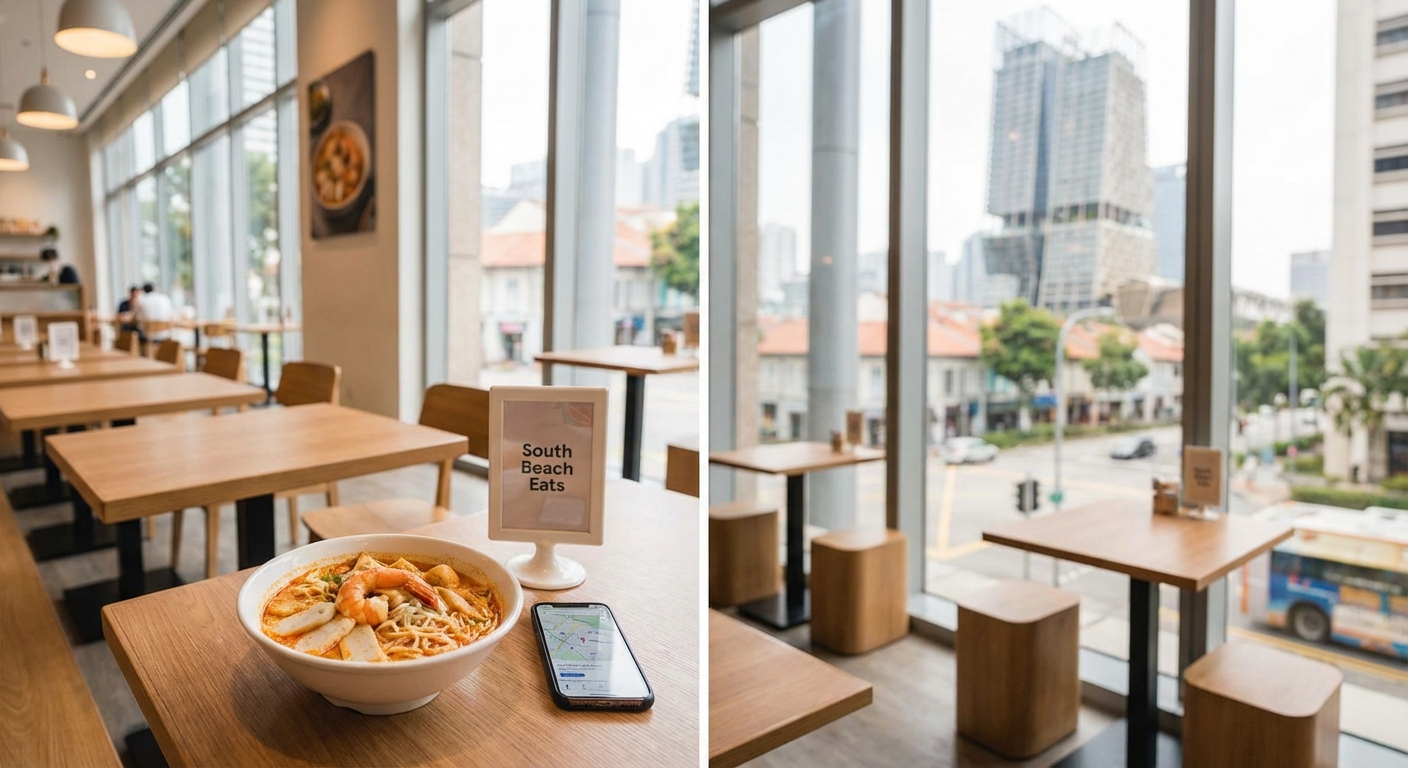
Not all laksa tastes the same. Singapore has two main types, and knowing the difference helps you order better.
Katong laksa comes from the Peranakan community in the east. It features thick rice noodles in coconut curry soup. The noodles come pre-cut. Toppings include prawns, fishcake, cockles, and bean sprouts.
Curry laksa has Chinese influences. The broth uses more curry powder and less coconut milk. You’ll often find chicken or tofu instead of seafood.
Around South Beach, most stalls serve Katong-style. It’s what tourists expect and what locals grew up eating.
A good laksa should make you sweat a little. The spice opens your sinuses, the coconut cools things down, and the noodles tie it all together. If you’re not reaching for tissues halfway through, they went too easy on the chili.
Timing your laksa hunt
Most hawker stalls open between 9am and 11am. The serious laksa spots start even earlier to prep their broth.
Lunch rush hits between noon and 1:30pm. Lines get long. Tables fill up. If you’re visiting during peak hours, grab your food first, then hunt for seating.
Late afternoon (3pm to 5pm) offers the sweet spot. Crowds thin out. Stalls are still fresh. You can actually sit down without hovering over someone finishing their meal.
Evening service runs until 8pm or 9pm at most hawker centers. Some stalls sell out earlier. Don’t show up at 7:45pm expecting full menu availability.
What makes laksa worth the hype
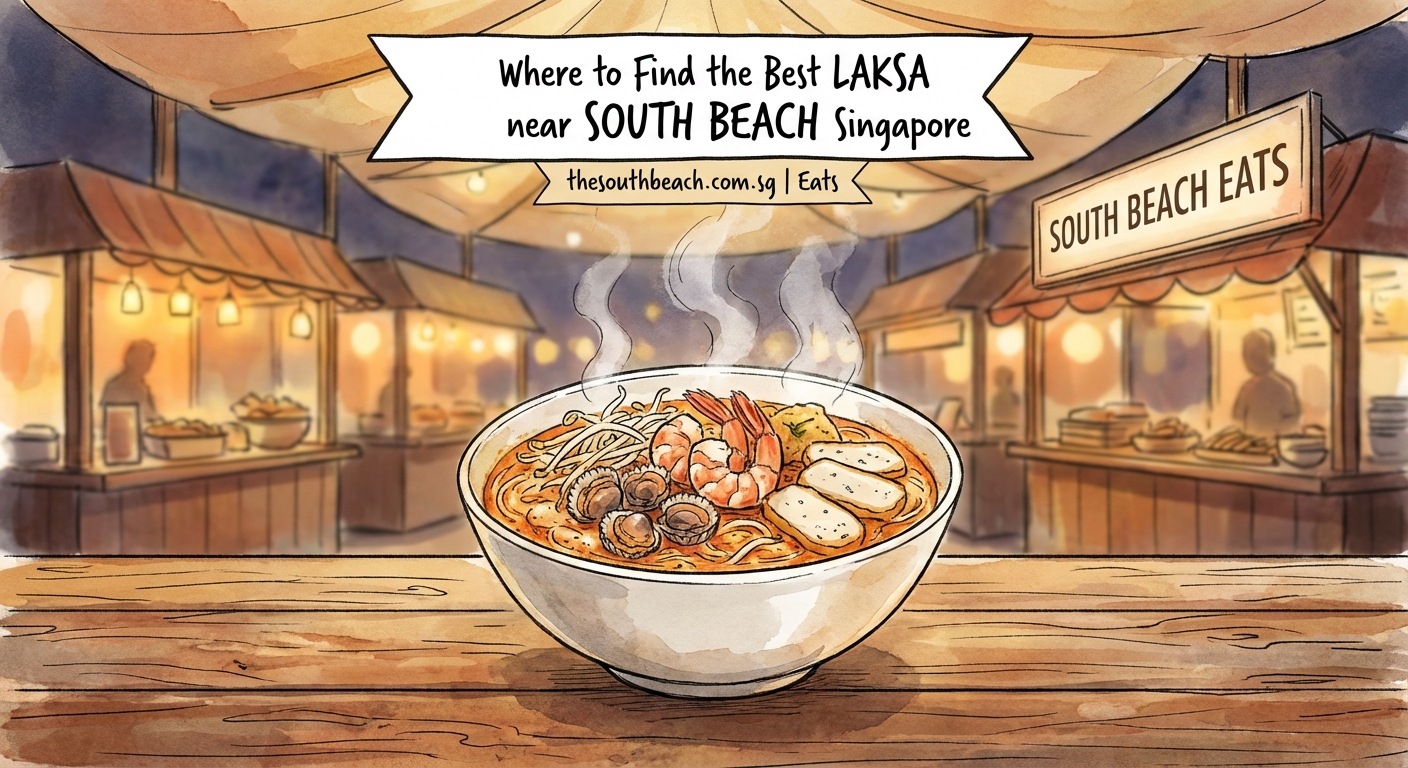
Laksa isn’t just spicy noodle soup. It’s a complete flavor experience that hits every taste receptor.
The coconut milk provides richness. Dried shrimp and shrimp paste add umami. Fresh laksa leaves (Vietnamese coriander) contribute that herbal brightness. Chili paste brings heat. And the seafood adds brininess that cuts through all that richness.
Good laksa achieves balance. Too much coconut and it tastes like dessert. Too much chili and you can’t taste anything else. Too little of either and the dish falls flat.
The best bowls make you slow down. You can’t rush through laksa. The heat builds with each spoonful. You need breaks. You sip the broth. You appreciate each ingredient.
How to order like a local
Walk up to the stall. Make eye contact with the hawker. Say “one bowl please” or hold up one finger.
They’ll ask about spice level. “Normal” means moderately spicy. “Less spicy” gets you a milder version. “Extra spicy” tests your limits.
Some stalls offer add-ons:
– Extra prawns ($1 to $2)
– Extra cockles ($1)
– Otah (grilled fish cake, $1)
Pay after you receive your bowl. Most hawkers accept cash only. Have small bills ready. Breaking a $50 note for a $5 bowl creates awkward moments.
Grab your own utensils and tissues from the communal station. Find a table. Eat.
Comparing laksa options near South Beach
| Spot | Style | Spice Level | Price | Best For |
|---|---|---|---|---|
| Sungei Road Laksa | Traditional Katong | Medium-high | $5-$7 | Authenticity seekers |
| 328 Katong Laksa | Classic Katong | High | $6-$8 | Traditional experience |
| Maxwell Food Centre | Mixed styles | Varies by stall | $4-$6 | Budget travelers |
| Restaurant laksa options | Modern fusion | Mild to medium | $12-$18 | Air-conditioned comfort |
The price difference between hawker and restaurant laksa is significant. You’re paying for ambiance and comfort, not necessarily better food.
Common mistakes tourists make
Ordering the largest size because you’re hungry. Laksa is rich. A regular bowl fills you up. The large size often goes unfinished.
Skipping the sambal on the side. That extra chili paste lets you customize heat level as you eat. Start without it, add gradually.
Eating too fast. The spice accumulates. Pace yourself. Take breaks between spoonfuls.
Comparing every bowl to the first one you tried. Each hawker has their own recipe. Appreciate the differences instead of ranking them.
Forgetting to hydrate. Order a drink. You’ll need it. Sugarcane juice or barley water works better than cold water.
What to eat alongside your laksa
Most people order laksa as a complete meal. The noodles, protein, and broth provide everything you need.
If you’re sharing or want variety, these sides pair well:
- Otah (grilled fish paste in banana leaf)
- Fried spring rolls
- Kueh pie tee (crispy cups with vegetables)
- Chendol (shaved ice dessert with coconut milk)
Skip heavy carbs like fried rice or noodles. Laksa already fills you up. Adding more starches leaves you uncomfortably full.
Tea or coffee after laksa helps with digestion. Most hawker centers have drink stalls nearby.
Finding your perfect bowl
Taste preferences vary. What locals call “the best” might not match your palate.
Some people want thick, creamy broth. Others prefer lighter, brothier versions. Some crave serious heat. Others want mild comfort food.
Try at least two different stalls during your visit. Notice what you prefer. The thick coconut style? The spicier version? More seafood or more noodles?
Your ideal laksa exists somewhere in this neighborhood. It just takes a few bowls to find it.
Making the most of your laksa adventure
Start with a classic Katong-style bowl from an established hawker. This gives you the baseline.
Then try a different stall with a different approach. Notice how the spice blend changes. How the coconut level varies. How the noodle texture differs.
Take notes on your phone if you’re serious about finding your favorite. After three or four bowls over several days, they start blending together in memory.
Ask locals which stall they prefer. You’ll get passionate, detailed opinions. Everyone has a laksa loyalty.
Don’t stress about finding “the absolute best.” The real joy comes from the hunt itself, trying different versions, and developing your own preferences.
Your next bowl awaits
South Beach puts you right in the center of Singapore’s laksa scene. You’re steps away from hawker legends and hidden gems that locals have loved for decades.
The best approach? Pick a stall, order a bowl, and see what all the fuss is about. Your taste buds will thank you. Your understanding of Singaporean food culture will deepen. And you’ll have a new appreciation for why this spicy, creamy, complex dish has captured hearts for generations.
Start with the closest option. Work your way through the neighborhood. By the end of your stay, you’ll have your own strong opinions about where to find the best laksa near South Beach Singapore.