 By eric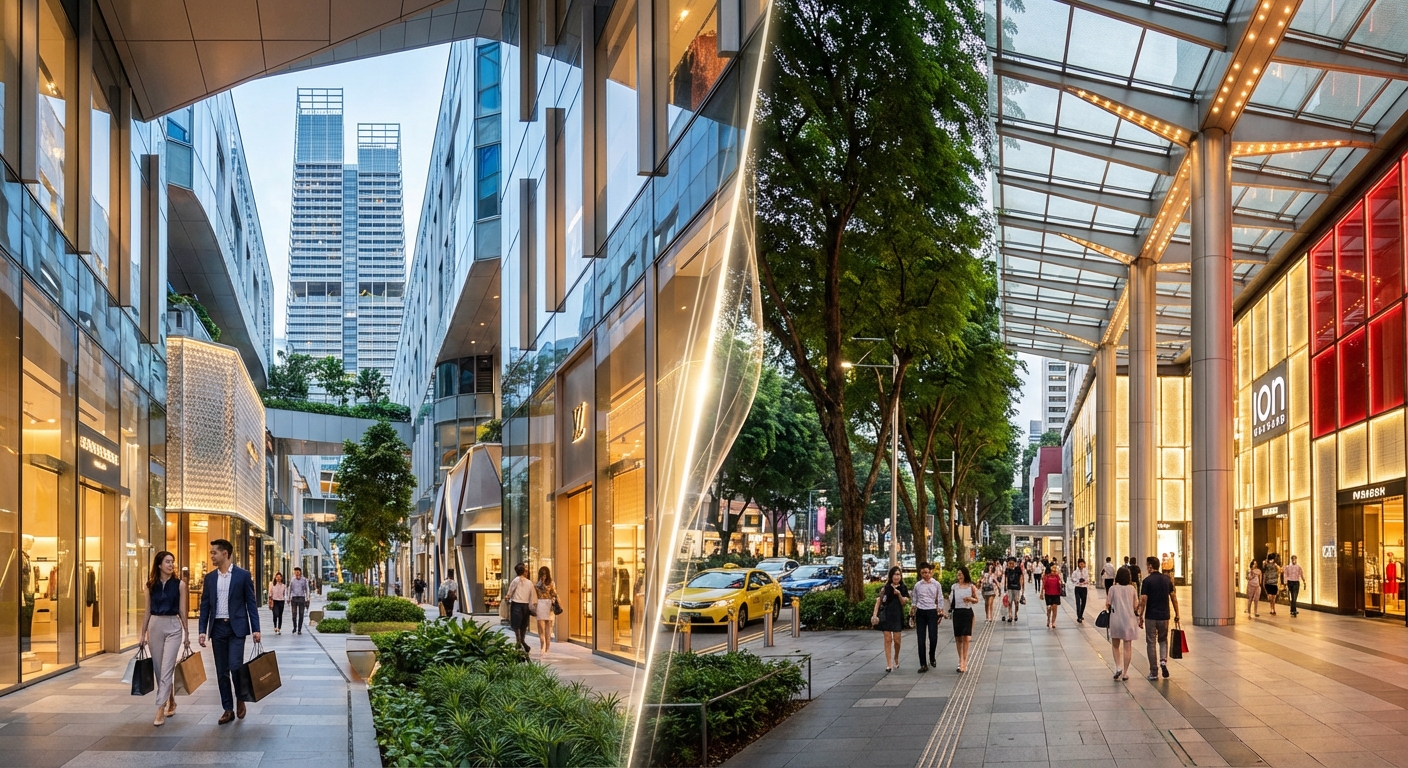
Singapore packs more shopping into one tiny island than most countries fit into entire cities. You can browse designer boutiques in the morning, haggle for souvenirs at a street market by lunch, and finish the day in a futuristic mall that looks like it belongs in a sci-fi movie. The challenge? Figuring out which areas deserve your limited vacation time.
Singapore offers distinct shopping districts, each with unique character. Orchard Road delivers luxury brands and department stores. Marina Bay combines high-end retail with waterfront dining. Bugis and Chinatown provide budget-friendly finds and cultural souvenirs. South Beach blends designer shops with art galleries. Choose based on your budget, interests, and how much walking you enjoy.
Orchard Road: The classic shopping strip
Orchard Road stretches for 2.2 kilometers and feels like someone built an entire neighborhood out of shopping malls. This is where Singaporeans go when they want to impress visitors or need to find absolutely anything.
The street hosts over 20 major malls. ION Orchard anchors the luxury end with brands like Prada, Dior, and Cartier. Ngee Ann City houses Takashimaya, one of Asia’s most famous department stores. Paragon targets the fashion-conscious crowd with contemporary labels.
But here’s what makes Orchard Road work for first-time visitors: variety. You can shop at high-end boutiques, then walk two blocks to find affordable fashion at Far East Plaza. Hungry? Every mall has at least three floors of restaurants. Need a break? The malls are connected by underground passages and air-conditioned walkways, which matters when the tropical heat hits 32°C.
The downsides? Crowds on weekends can feel overwhelming. Prices skew higher than other districts. And after visiting three malls, they start to blur together.
Marina Bay: Shopping with a view
Marina Bay proves that shopping doesn’t have to happen in a windowless mall. The Shoppes at Marina Bay Sands sits right on the waterfront, offering views of the bay while you browse.
This area targets luxury shoppers. You’ll find flagship stores for Chanel, Louis Vuitton, and Hermès. The architecture alone justifies a visit. The canal running through the center, complete with gondola rides, creates an almost surreal atmosphere.
The real advantage here is combining activities. Shop for an hour, then visit the ArtScience Museum next door. Grab lunch overlooking the water. Watch the light show at night. Marina Bay works best when shopping is part of a larger itinerary, not the sole focus.
Price-conscious travelers should know that this isn’t bargain territory. A coffee here costs what a full meal costs in other neighborhoods. But the experience and location make it worthwhile for at least one visit.
Bugis: Where locals actually shop
Bugis Street Market operates in a completely different universe from Marina Bay. This covered market sells everything from $5 t-shirts to phone accessories to knock-off designer bags.
The energy here runs high. Vendors call out deals. Shoppers haggle over prices. The aisles get cramped during peak hours. But if you want affordable souvenirs or casual clothing, Bugis delivers.
Right next to the market sits Bugis Junction and Bugis+, two malls that bridge the gap between street market prices and Orchard Road luxury. You’ll find mainstream brands like Uniqlo, Sephora, and Cotton On at reasonable prices.
The neighborhood also offers cultural depth. Arab Street and its famous Sultan Mosque sit a 10-minute walk away. Haji Lane, an alley packed with independent boutiques and cafes, provides a completely different shopping vibe. You can easily spend half a day here without entering a single chain store.
“Bugis gives you the real Singapore shopping experience. Yes, Orchard Road is impressive, but Bugis is where you see how locals hunt for deals and where small businesses thrive alongside big brands.” – Local shopping guide
Chinatown: Culture meets commerce
Chinatown Complex and the surrounding streets sell traditional goods alongside tourist trinkets. You’ll find jade jewelry, Chinese tea sets, silk scarves, and paper lanterns. The quality varies wildly, so inspect items carefully before buying.
What makes Chinatown special is the atmosphere. Incense drifts from nearby temples. Hawker centers serve authentic local food for $3-5 per meal. The shophouses, painted in pastel colors, create an Instagram-worthy backdrop.
Chinatown Complex itself is a maze of stalls selling everything from herbs to electronics. The upper floors house one of Singapore’s best hawker centers. This combination of shopping and eating makes it easy to spend several hours here.
Prices are negotiable at many stalls, unlike the fixed prices at malls. Start by offering 30% less than the asking price and meet somewhere in the middle. This only works at independent stalls, not at established shops.
South Beach: The boutique alternative
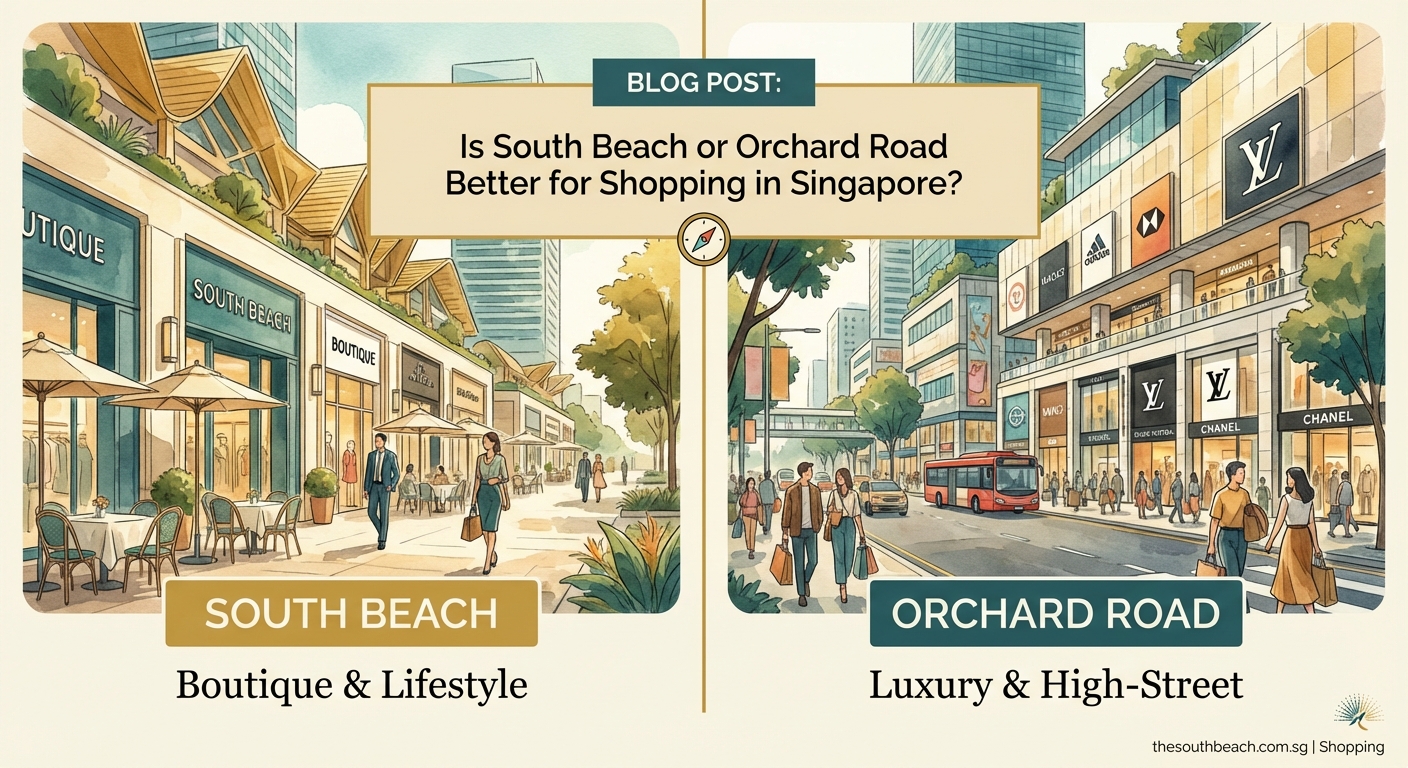
South Beach takes a different approach to retail. Instead of cramming hundreds of stores into one space, it curates a smaller selection of brands and designers.
The shopping here leans contemporary. You’ll find Scandinavian furniture brands, independent fashion labels, and concept stores that mix clothing with art books and home goods. It’s less about ticking off brand names and more about discovering something unique.
The area also includes art galleries and design studios. The architecture itself, a mix of heritage buildings and modern towers, creates interesting contrasts. Beach Road, running alongside South Beach, offers additional shopping options in older buildings that haven’t been completely modernized.
This isn’t where you go to buy 20 keychains for coworkers back home. South Beach works best for travelers who enjoy browsing, who appreciate design, and who don’t need to hit every major brand.
Little India: Textiles and spices
Little India assaults your senses in the best way. The smell of spices and incense fills the air. Colorful saris hang in shop windows. Bollywood music plays from speakers.
Serangoon Road, the main artery, is lined with shops selling Indian textiles, jewelry, and religious items. Mustafa Centre, a 24-hour department store, has achieved legendary status among bargain hunters. This chaotic, crowded store sells everything from electronics to groceries to luggage, often at prices lower than anywhere else in Singapore.
The shopping here requires patience. Stores are smaller and more crowded than in other districts. But if you want gold jewelry, traditional clothing, or authentic spices to bring home, Little India can’t be beaten.
The neighborhood also offers the cheapest meals in Singapore. Vegetarian banana leaf rice costs around $3. Sweet lassi provides a refreshing break from shopping for less than $2.
Planning your shopping route
Most first-time visitors try to see everything and end up exhausted. A better approach is choosing two or three areas based on what you actually want to buy.
Here’s a practical framework:
- List what you want to buy (luxury goods, souvenirs, clothing, electronics, food items)
- Match those items to the district that specializes in them
- Check the location of your hotel and plan routes that minimize travel time
- Schedule shopping for mornings or late afternoons to avoid peak crowds
- Build in breaks for meals and rest
Singapore’s MRT makes getting between districts easy. Most shopping areas sit within a five-minute walk of a station. Grab (Southeast Asia’s Uber) fills in the gaps when you’re tired or carrying bags.
Comparing key shopping districts
| District | Best For | Price Range | Crowd Level | Unique Feature |
|---|---|---|---|---|
| Orchard Road | Variety, brands | Mid to high | Very high | Connected malls |
| Marina Bay | Luxury, experience | High | Moderate | Waterfront location |
| Bugis | Budget finds | Low to mid | Very high | Street market energy |
| Chinatown | Souvenirs, culture | Low to mid | High | Heritage atmosphere |
| South Beach | Design, boutiques | Mid to high | Low | Curated selection |
| Little India | Textiles, spices | Low | High | Cultural immersion |
Practical shopping tips for Singapore
Sales happen twice a year. The Great Singapore Sale runs from May to July. Year-end sales start in November and run through January. Discounts during these periods can reach 50-70% at participating stores.
Most malls open at 10am and close at 10pm. Smaller shops in cultural districts might close earlier, around 7pm or 8pm. Hawker centers near shopping areas provide cheap meal options, saving your budget for actual shopping.
Bring a reusable shopping bag. Singapore charges for plastic bags at most stores. The fee is small, but bags add up when you’re hitting multiple shops.
Credit cards work everywhere except small market stalls. Some vendors in Bugis and Chinatown prefer cash. ATMs are plentiful, but notify your bank before traveling to avoid card blocks.
GST (Goods and Services Tax) refunds are available for tourists spending over $100 at participating stores. Look for the “Tax Free” logo. Keep receipts and claim your refund at the airport before departure.
Common shopping mistakes to avoid
- Visiting Orchard Road on Saturday afternoon (peak crowd time)
- Assuming all “designer” goods at street markets are authentic (they’re not)
- Paying the first price quoted at markets without negotiating
- Carrying large amounts of cash in crowded areas
- Skipping smaller neighborhoods because they’re not famous
- Buying electronics without checking if they work in your home country (voltage and plug types vary)
Weather and timing considerations
Singapore’s weather is consistently hot and humid year-round. Rain can hit any afternoon, usually in short, heavy bursts. This makes covered markets and connected malls particularly appealing.
Weekday mornings offer the best shopping conditions. Malls are quieter. Staff have more time to help. You can actually see the merchandise without crowds blocking your view.
Public holidays and school vacation periods (June and December) bring larger crowds. Chinese New Year (January or February) sees some smaller shops close for several days, though major malls remain open.
Making the most of limited time
If you only have one day for shopping, this route covers the most ground:
- Morning: Orchard Road (ION Orchard and Ngee Ann City)
- Lunch: Food court at Ngee Ann City or nearby hawker center
- Afternoon: Bugis Street Market and Bugis Junction
- Late afternoon: Chinatown for souvenirs
- Evening: Marina Bay for sunset shopping and dinner
This hits luxury, budget, cultural, and experiential shopping in about 8 hours. Take the MRT between stops to save time and energy.
If you have multiple days, dedicate each day to one or two districts. This allows for a more relaxed pace and better appreciation of each area’s character.
Finding what fits your style
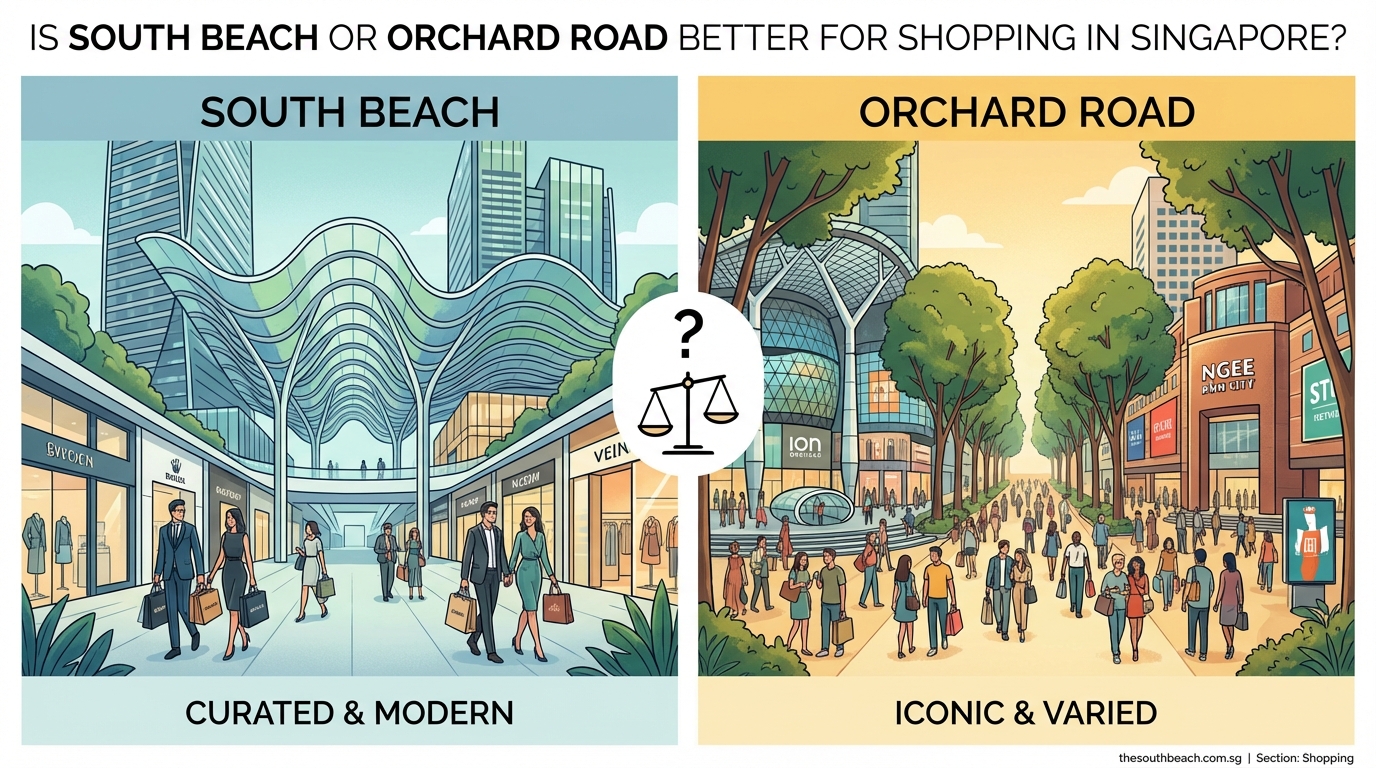
The best shopping area in Singapore depends entirely on what you value. Orchard Road offers the most comprehensive selection but lacks character. Marina Bay provides luxury with views but at premium prices. Bugis and Chinatown deliver authentic local experiences and better deals but require tolerance for crowds and chaos.
South Beach offers a middle path for travelers who want quality without the mall experience. Little India provides cultural immersion that goes far beyond shopping.
Your ideal itinerary probably includes elements from several districts. A few hours at Orchard Road to see the famous shopping street. A morning at Bugis for affordable finds. An evening at Marina Bay for the atmosphere. Each area shows you a different side of how Singapore approaches retail.
The beauty of Singapore’s compact size means you can sample multiple districts in a single trip. Try one, see how it feels, then adjust your plans. The MRT puts every shopping area within 30 minutes of any other.
Pack comfortable shoes, bring a water bottle, and remember that the best shopping discoveries often happen in the places you didn’t plan to visit.